Market Updates · Tips & Guides
Honolulu's Permit Line Is Getting Longer
Applications jumped 34% in a year. Approvals barely moved.

Quick answer
Honolulu’s September 2026 permit update shows applications rising faster than permits issued. CivCheck can help eligible residential applicants reduce corrections before DPP review, but its early review-time gains do not guarantee a move-in or construction date.
Everybody on Oʻahu knows somebody waiting on a permit. The uncle with the half-built lānai. The family down the street whose new kitchen cabinets have been sitting in the carport, still in plastic, since spring.
If that's you, the city has some good news and some not-so-good news. The good news is that more people than ever are using Honolulu's online permit system. The not-so-good news is the same thing.
More people in line, same size kitchen
The Department of Planning and Permitting launched HNL Build, its online permitting system, a little over a year ago. Since then, registered users have more than tripled, from 3,495 last September to 11,269 at the September briefing.
Applications followed. Pacific Business News reported that building permit applications rose 34% over the past year. Permits actually issued? Up just 5.55%. These are the figures presented in September 2026, rather than a live count.
That gap is the whole story. Picture your favorite plate lunch spot when the line gets a third longer but the kitchen only cooks a little faster. The longer line is still there. Some orders take longer than others.
DPP Director Dawn Takeuchi Apuna walked the City Council through the numbers at the September 23 briefing. She said the system has settled down, and staff and applicants have gotten used to it. But she was also clear that HNL Build was never meant to make permitting faster. That job belongs to a different tool.
What's actually inside 9,252 permits
The September briefing put the backlog at 9,252 building permits. The reported groups include:
- About 4,400 are active and less than a year old
- About 2,450 have sat in review, idle, for more than a year
- Just over 2,000 are in the issuance stage
- 420 have no electronic record at all
Apuna's point was that one big total doesn't tell you much. What matters is which permits are moving, which have gone quiet, who each one is waiting on, and which can simply be closed. Sorting that out, she said, is how a backlog becomes a plan.
That idle group is worth a second look if you own a home here. A permit left hanging from a remodel years ago has a way of showing up when the house goes on the market.
Fewer do-overs, not faster reviewers
The tool Apuna is counting on is CivCheck, AI plan-review software from a company called Clariti. It reads your application before a human reviewer does and flags mistakes you can fix up front.
DPP rolled it out for residential permits in December as a free, optional tool. Not many people used it. So the city made it mandatory for eligible residential projects on Sept. 1. Commercial expansion was still planned for later in the year at the time of the September briefing.
Check DPP’s CivCheck eligibility guide before submitting. It covers qualifying single-family, two-family, duplex, ADU, and ʻohana projects; Quick Permit projects and several other types do not use it. CivCheck is a pre-check, and DPP still makes the permit decision.
The logic is simple. Most of the wait isn't one long review. It's the back-and-forth. At that briefing, residential permits averaged 3.3 review cycles, and commercial permits averaged 3.7. Every round means corrections, a resubmission, and another trip to the back of the line.
Early results from people who used CivCheck:
- Review cycles down 58%, to 1.4
- Corrections down 67%, from 23.5 to 7.7
- Review time down from 73 days to 32.5, about 40 days saved per residential permit
Those are early review-time results, not a promise that a permit will be issued in 32.5 days. Hawaiʻi Public Radio’s September 24 report put the average application-to-issuance time for residential permits issued in 2026 at 218 days. That broader timeline measures a different part of the process.
Those numbers come from early adopters, so we'll see if they hold now that it's required. Apuna's bet is that cleaning up applications before they hit the queue does more good than asking every reviewer to work a little faster.
So what do you do with this?
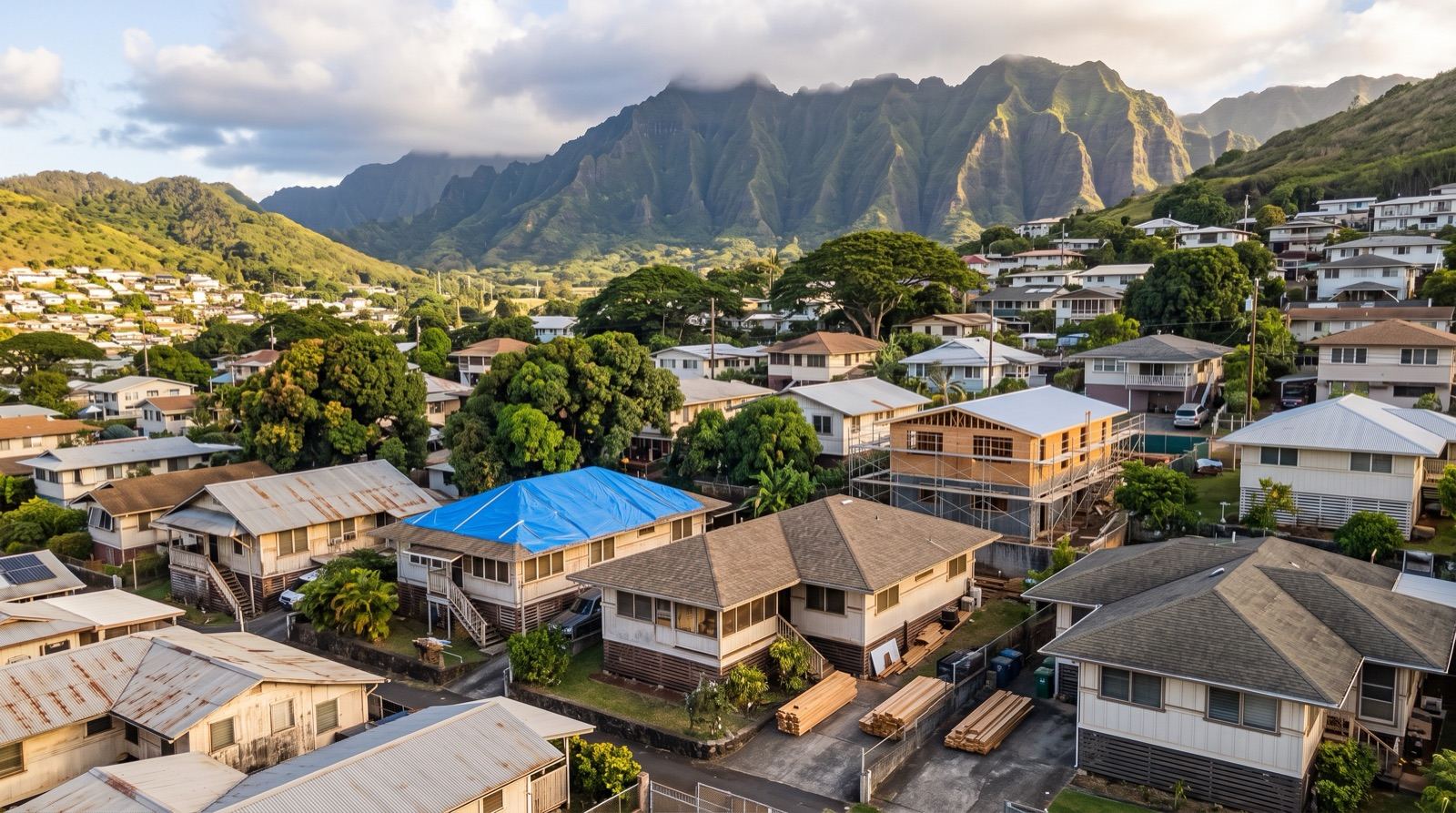
If you're planning a project, like an ʻohana unit so the kids can move back home, a bedroom for tūtū, or a second bathroom so the morning line moves faster, build the wait into your plan. Budget for extra months of rent or a longer construction loan, and hire a designer or contractor who already knows CivCheck. A clean first submission can help avoid another round of corrections.
If you're thinking about selling, look up your property's permit history on DPP's site before you list. An old open permit is a lot easier to sort out before escrow than during it.
And if you're buying, treat the permit record like part of the house. Ask about it the same way you'd ask about the roof.
On an island where we can't just spread out, a lot of our housing gets added one garage conversion and one second story at a time. That makes the permit line more than a paperwork headache. It's part of how Oʻahu grows.
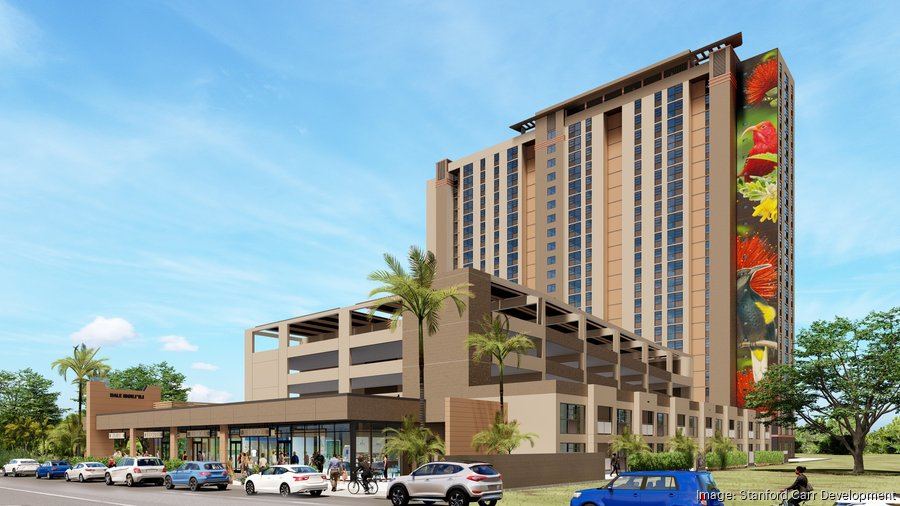
For another look at how housing gets built here, read our Ke Ola Hou project update.
The front door is working. People are showing up online in record numbers. Now the back office has to catch up, and the next year will tell us whether the AI can close that gap.
Sources
- Pacific Business News: Honolulu building permit backlog rises as applications surge (September 23, 2026)
- DPP: Getting started with CivCheck and eligible project types (checked October 2, 2026)
- Hawaiʻi Public Radio: Honolulu building permit backlog grows despite AI processing tools (September 24, 2026)