Project Updates
Where the Bowl-O-Drome Stood, 278 Families Are About to Move In
Ke Ola Hou will bring 278 rental homes to the old Stadium Bowl-O-Drome site in Mōʻiliʻili—while eligible Native Hawaiian beneficiaries keep their place on the homestead waitlist.

Quick answer
Ke Ola Hou is a 278-unit DHHL rental community in Mōʻiliʻili for eligible Native Hawaiian beneficiaries. The first move-ins are expected at the end of October 2026, and leasing does not remove a beneficiary from the homestead waitlist.
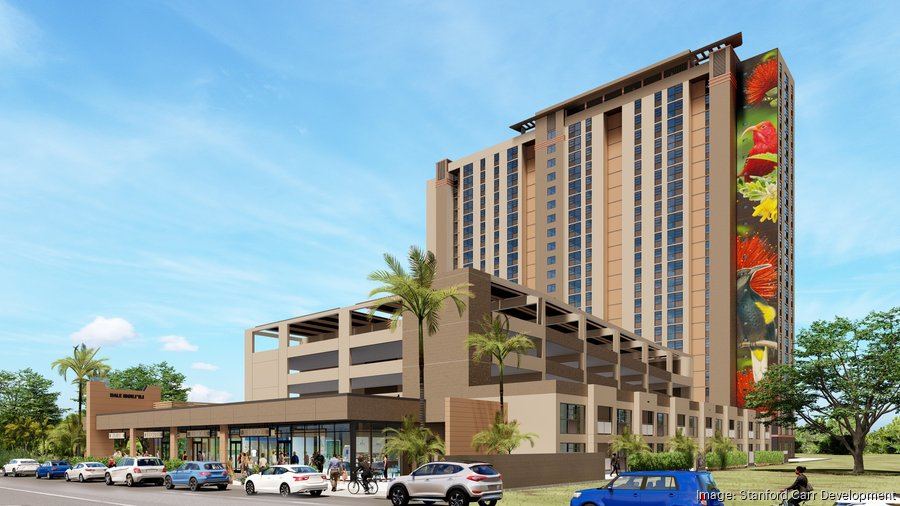
If you have passed through Mōʻiliʻili lately, you have watched a tower rise from the lot where Stadium Bowl-O-Drome once stood. The building is Ke Ola Hou—“a new life” or “a new beginning”—and its first residents are expected to move in at the end of October.
From bowling lanes to 278 front doors
Pacific Business News reported that Ke Ola Hou is the Department of Hawaiian Home Lands’ first rental apartment building. Stanford Carr Development built the $155 million project, which will provide 278 homes for Native Hawaiian beneficiaries on the DHHL waitlist.
The project includes a 23-story tower with 271 homes and seven three-bedroom townhomes along the parking structure facing Honolulu Stadium State Park. The tower is designed around family-sized homes: about 60% of its apartments are two-bedrooms, with one studio, one one-bedroom, and one three-bedroom on each floor.
The site has its own history. Bowl-O-Drome opened in 1955 and operated for decades before closing. During demolition, project manager Kaloa Robinson found an old door tag belonging to Adelaide Stagbar, whose family ran the bowling alley. The new building’s name connects another generation: it came from Robinson’s grandmother, Mima.
Leasing does not take someone out of line
The key distinction is that a Ke Ola Hou lease is not a homestead lease award. Beneficiaries who move in keep their place on the DHHL waitlist.
That makes the building a different kind of housing option: a stable home for someone already waiting for a homestead lease, rather than a trade that ends the wait. For the details that apply to a specific household, prospective residents should confirm eligibility and process directly with DHHL.
Who can qualify and what the caps look like
The reported process is first-come, first-served for eligible Native Hawaiian beneficiaries with household income at or below 100% of area median income. For a family of four in Honolulu, the 2026 threshold cited in the reporting is $154,000.
Rent ceilings are set by income tier. Pacific Business News reported a maximum of $808 for a studio at 30% AMI and $4,005 for a three-bedroom at 100% AMI. Those are ceilings rather than a single asking rent, so applicants should confirm current availability, household qualification, and rent directly before relying on a figure.
A tower in town, not a subdivision at the edge
Ke Ola Hou is notable not only for who it serves, but for where it sits. Mōʻiliʻili is close to jobs, transit, the university, and daily services. For a household balancing work, school, and family care, that central location changes the time cost of a home as much as the rent number does.
The project was awarded to Stanford Carr in June 2020 and broke ground in winter 2024. The interval is a reminder that urban housing takes time to assemble here: land, financing, approvals, and construction all have to line up before a door is ready to open.
This one building will not resolve the DHHL waitlist or Honolulu’s housing shortage. But it adds 278 homes in town and establishes a rental model DHHL can evaluate for future beneficiaries. That makes the opening worth watching—for Mōʻiliʻili, and for the larger question of how housing can serve people while they wait for a permanent homestead lease.
Source
- Pacific Business News: Ke Ola Hou rental apartment project in Mōʻiliʻili (September 18, 2026)