Schools
Hawaiʻi’s public schools are recovering. What Oʻahu homebuyers should know.
Hawaiʻi students are regaining ground faster than most of the country. Here is what the latest numbers mean—and do not mean—when schools are part of an Oʻahu home search.

For many parents searching for a home on Oʻahu, the questions arrive in roughly the same order. What can we afford? What will the commute look like? Is there enough room? Then comes the one that rarely has a simple answer: What about the schools?
School data is usually where useful information goes to disappear. Too many acronyms, too many competing tests, and too much temptation to turn one number into a verdict about an entire campus.
The useful part of Hawaiʻi’s latest story is simpler.
Our public-school students lost real ground during the pandemic. Since then, they have been gaining it back faster than students in most other states. That does not mean the work is finished. It means some of the work is working.
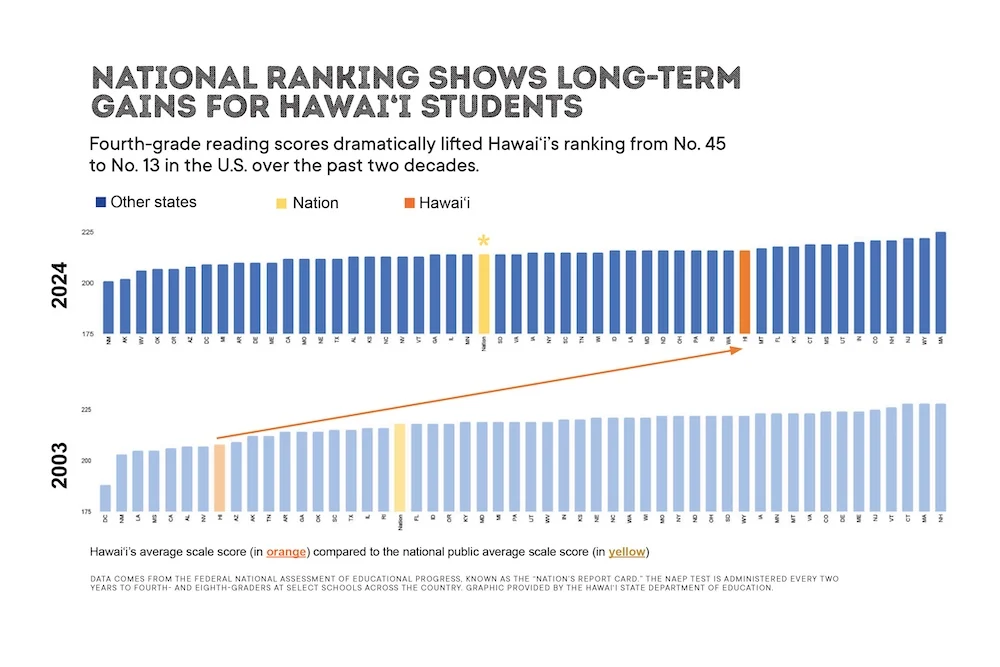
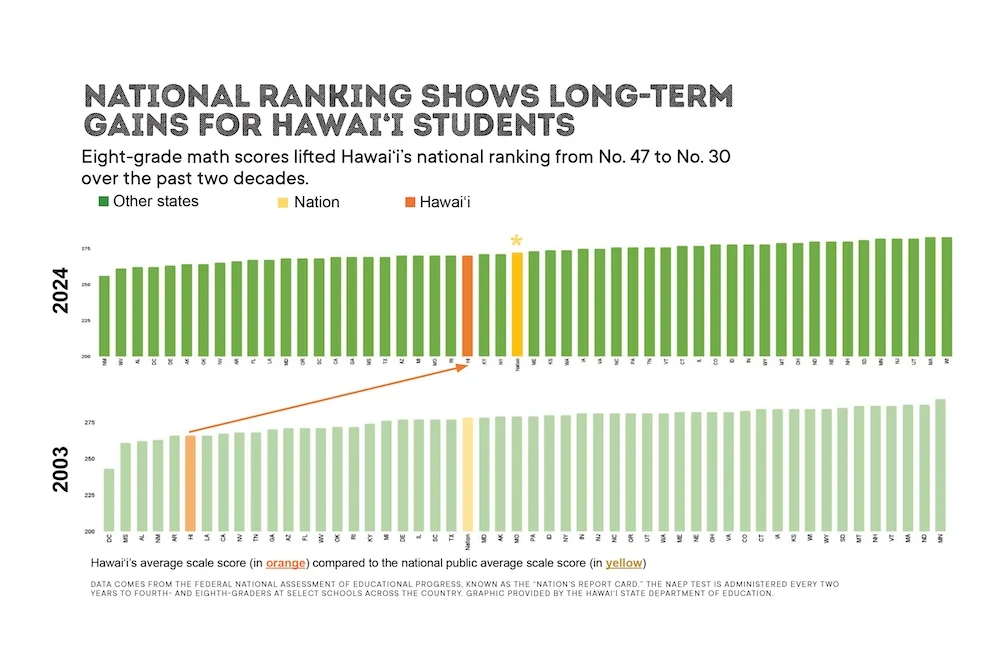
Researchers with the Education Recovery Scorecard compared academic performance from 2019 through 2024. Hawaiʻi ranked second in the country for reading recovery and fourth for math recovery. The state’s fourth graders also improved in math on the 2024 National Assessment of Educational Progress, one of only 15 states to post a statistically significant gain.
That is worth noticing. It is not a reason to declare victory.
The statewide numbers are moving in the right direction
The newest statewide Strive HI results available cover the 2024–25 school year. Language arts proficiency rose to 53%, math reached 41%, and science reached 43%. Regular attendance improved to 76%. The on-time graduation rate held at 86%, while postsecondary enrollment increased to 53%.
Every one of those numbers still leaves room for improvement. Taken together, though, they show that the recovery described by Hawaii Business in 2025 did not stop with one promising national report.
The more important question is what schools are doing differently.
The short answer is not one new curriculum or one exceptional principal. It is a collection of practical things: checking student progress more often, identifying problems earlier, giving students extra instruction, creating useful after-school time, and paying attention when attendance starts slipping.
None of that is flashy. Most things that work are not.
What three schools did with the information
Hawaii Business looked closely at three Title I schools: Kīpapa Elementary in Mililani, Washington Middle School in McCully, and Kaʻū High & Pāhala Elementary on Hawaiʻi Island.
The campuses serve different communities, but their approach shared a pattern. They stopped treating test results as an annual autopsy and started using data while there was still time to help the student in front of them.
At Kīpapa Elementary, teachers and academic coaches regularly reviewed assessments, organized students by the specific help they needed, and used small-group tutoring to address gaps. The school posted sharp proficiency gains during the 2023–24 year. Its principal was also careful not to treat one strong year as a permanent condition. A new group of students brings new needs.
At Washington Middle, the work extended beyond the classroom. The school has built a network of after-school options that includes tutoring, sports, clubs, arts, and a competitive math team. That matters because the hours after dismissal are not an abstract scheduling problem for working families. They are part of whether a student has structure, support, and a reason to stay connected to school.
Kaʻū faced a different problem. Some students lived far from campus, dealt with long and difficult transportation, and were not being reached by the programs that already existed. The response combined tutoring with meals, transportation, family outreach, and a community partner closer to where students lived.
That is the larger lesson. A program only works if the student can actually get to it.
Recovery and proficiency are not the same thing
This distinction matters.
Hawaiʻi can be one of the strongest states in academic recovery and still have too many students below grade-level expectations. Recovery measures how much ground has been regained. Proficiency measures where students are now.
Both are useful, and neither tells the whole story alone.
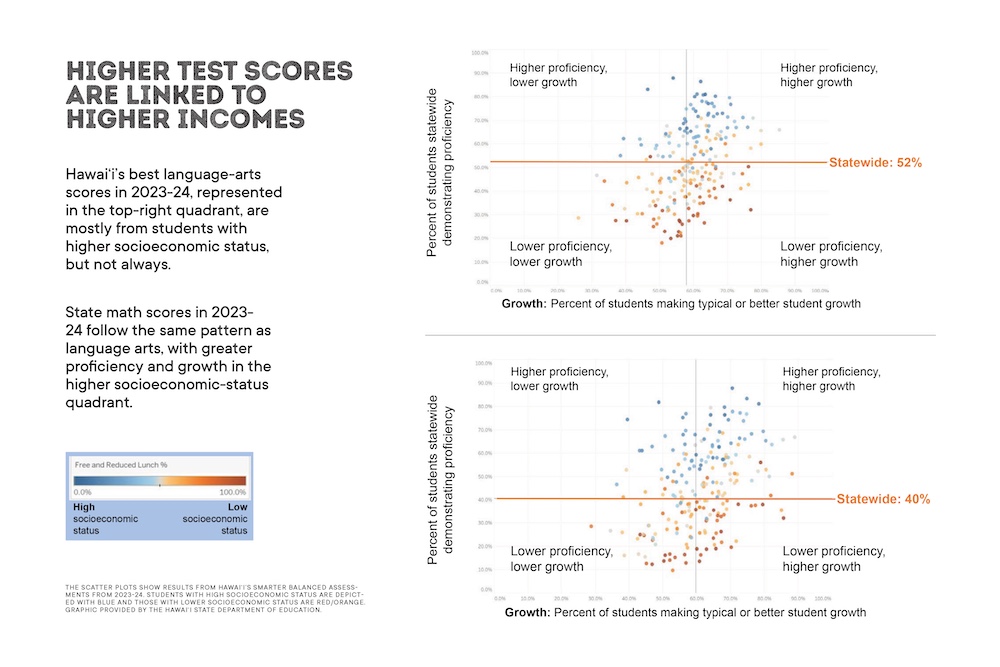
A school with modest proficiency but strong growth may be doing meaningful work with students who arrived behind. A school with high proficiency may still have attendance problems or large gaps between student groups. A statewide gain can also hide campuses that are struggling.
The numbers should start a better question, not end the conversation.
The pressure point is whether the support lasts
Much of the post-pandemic recovery was helped by temporary federal funding. Schools used that money for tutoring, summer learning, technology, added staff, and other academic support. Those dollars were never permanent.
Hawaiʻi has continued funding summer learning and other programs in different ways, but the long-term issue remains. The strategies producing progress require people, time, transportation, and consistent attendance. None of those are free.
The latest statewide results show regular attendance at 76%. That is an improvement, but it also means roughly one out of every four students was not meeting the state’s regular-attendance measure.
A tutoring program cannot help a student who is not there. A good teacher cannot recover months of missed instruction alone. Attendance sounds basic because it is basic. It is also one of the hardest parts to fix when families are dealing with housing instability, transportation, health, or work schedules.
What this does—and does not—mean for Oʻahu real estate
School information matters to many buyers, but it would be too simple to say that improving scores automatically raise nearby home values. A sale price is shaped by the property, location, condition, inventory, financing, and the buyers competing for it. School data can be one consideration inside that decision. It is not an appraisal adjustment by itself.
The same caution applies to private-school costs. If a family decides that a public school meets its child’s needs, avoiding tuition may materially change the household budget. That does not mean the family’s mortgage debt-to-income ratio automatically improves by the same amount. Lenders calculate DTI from monthly debt obligations, and individual underwriting varies. The practical benefit is more breathing room in the family’s real budget, not a guaranteed increase in the loan amount.
The clearest real-estate impact is choice. Better information—and measurable progress at schools in different parts of the island—can help families compare more neighborhoods using their own priorities instead of relying on an old reputation or a single rating.
That is especially important on Oʻahu, where the tradeoffs between price, commute, home type, and daily life can change within a few miles. The goal is not to push a buyer toward Mililani, McCully, Kapolei, Kailua, or anywhere else. It is to keep the search wide enough for the family to make an informed decision.
A better way to compare schools during a home search
Families often ask us which Oʻahu schools are “good.” I understand the question, but a one-word answer would not be honest or useful.
School performance changes. Attendance boundaries can change. A campus that fits one child well may not fit another. A rating on a real estate portal also cannot tell you about a specific program, a student’s support needs, or what is happening under new leadership.
Start with the exact property address and use the Hawaiʻi Department of Education SchoolSite Locator to identify the general service area. The DOE says the locator is for reference and should not be the only source used for a purchase or rental decision, so confirm the boundary directly with the school.
Then look at more than one year of data. Review proficiency, academic growth, attendance, graduation rates where applicable, and the programs that matter to your family. When possible, speak directly with the school about student support, after-school options, and how families receive progress updates.
Real estate agents can provide objective school information consistently and point buyers to reliable sources. We should not make the judgment for you or use school opinions to narrow where you are allowed to look. Our role is to help verify the address, understand the housing tradeoffs, and find the official information. The decision about the right school belongs to your family.
Progress is real. So is the remaining work.
Hawaiʻi’s public schools deserve credit for regaining ground faster than most of the country. Teachers, administrators, students, families, and community partners did not get there through slogans. They did it through assessments, tutoring, summer programs, after-school support, and the daily work of getting students back into classrooms.
The next stage will be less about recovery language and more about durability.
Can the state keep the programs that are producing results? Can schools improve attendance? Can successful approaches reach students whose barriers begin long before the first bell?
That is the real test now. The momentum is there. Keeping it will take the same kind of steady work that created it.
Sources
- Cynthia Wessendorf, Hawaiʻi’s Public Schools Are National Leaders in Academic Recovery. Can They Keep Up the Momentum?, Hawaii Business Magazine, May 5, 2025.
- Hawaiʻi State Department of Education, Hawaiʻi public schools rank 4th in math recovery, 2nd in reading recovery, national report finds, February 18, 2025.
- Hawaiʻi State Department of Education, Post-pandemic recovery in progress: Hawaiʻi students gain ground in core subjects, attendance, college-going rate, September 18, 2025.
- National Center for Education Statistics, Hawaiʻi NAEP state profile.
- Hawaiʻi State Department of Education, Find Your School.
- National Association of REALTORS®, FAQs on Steering, Crime and Schools, June 5, 2026.
- Consumer Financial Protection Bureau, What is a debt-to-income ratio?.
- Images and graphics republished with permission from the Hawaii Business article above.