Financing
After Lowell, a Local Lender Makes an Exception
Finance Factors is letting storm-damaged homes borrow against their equity while insurance claims catch up.

Quick answer
Finance Factors' Hurricane Lowell Recovery HELOC lets owners of storm-damaged homes on Kauaʻi and other islands borrow against their equity, up to $1 million, at a discounted rate while insurance claims are pending. The borrowing amount is reduced because the homes are damaged, so get the terms in writing and check them against your own budget.
If you were on Oʻahu the week of Sept. 8, you know the routine by heart. Fill the water jugs. Charge every phone and power bank in the house. Make the Costco run and lose the battle for the last case of water. Check the storm track before bed, then check it again at 2 a.m.
Then Hurricane Lowell passed to the west, and Kauaʻi took the hardest hit. High winds, heavy rain and flooding left damage across the island, and at one point about 90% of Kauaʻi's electric co-op customers were without power. A month later, our neighbors on the Garden Isle are still cleaning up, and one of the more practical pieces of help so far has come from a local lender.
A Loan for a House That Isn't Whole
Finance Factors, Hawaiʻi's largest locally owned depository loan company, has launched a Hurricane Lowell Recovery HELOC for homeowners whose properties were damaged in the storm.
Quick refresher: a HELOC, or home equity line of credit, lets you borrow against the equity you've built up in your home. It works like a revolving credit line with the house as collateral. You draw what you need, pay it down, and can draw again.
Here's the unusual part. A damaged home normally doesn't qualify for a HELOC at all. To a lender, a house with a hole in the roof is a risky thing to lend against. This program makes an exception, so owners can use their equity to pay for repairs or other needs.
There are tradeoffs. Because the risk is higher, the amount you can borrow is reduced, and the line tops out at $1 million. In return, it comes with a discounted interest rate. The program opened on Sept. 21 and doesn't have an end date.
The Gap Between the Claim and the Contractor
If you've ever filed a big insurance claim, you know it rarely moves fast. Adjusters get booked up. Paperwork goes back and forth. After a storm that hit a whole island at once, the line is long.
That's the gap this loan is meant to fill. Lisa Tarumoto, a senior vice president who oversees residential lending at Finance Factors, noted that many Kauaʻi owners will be waiting on insurance for a while, and this gives them a way to get repairs going in the meantime.
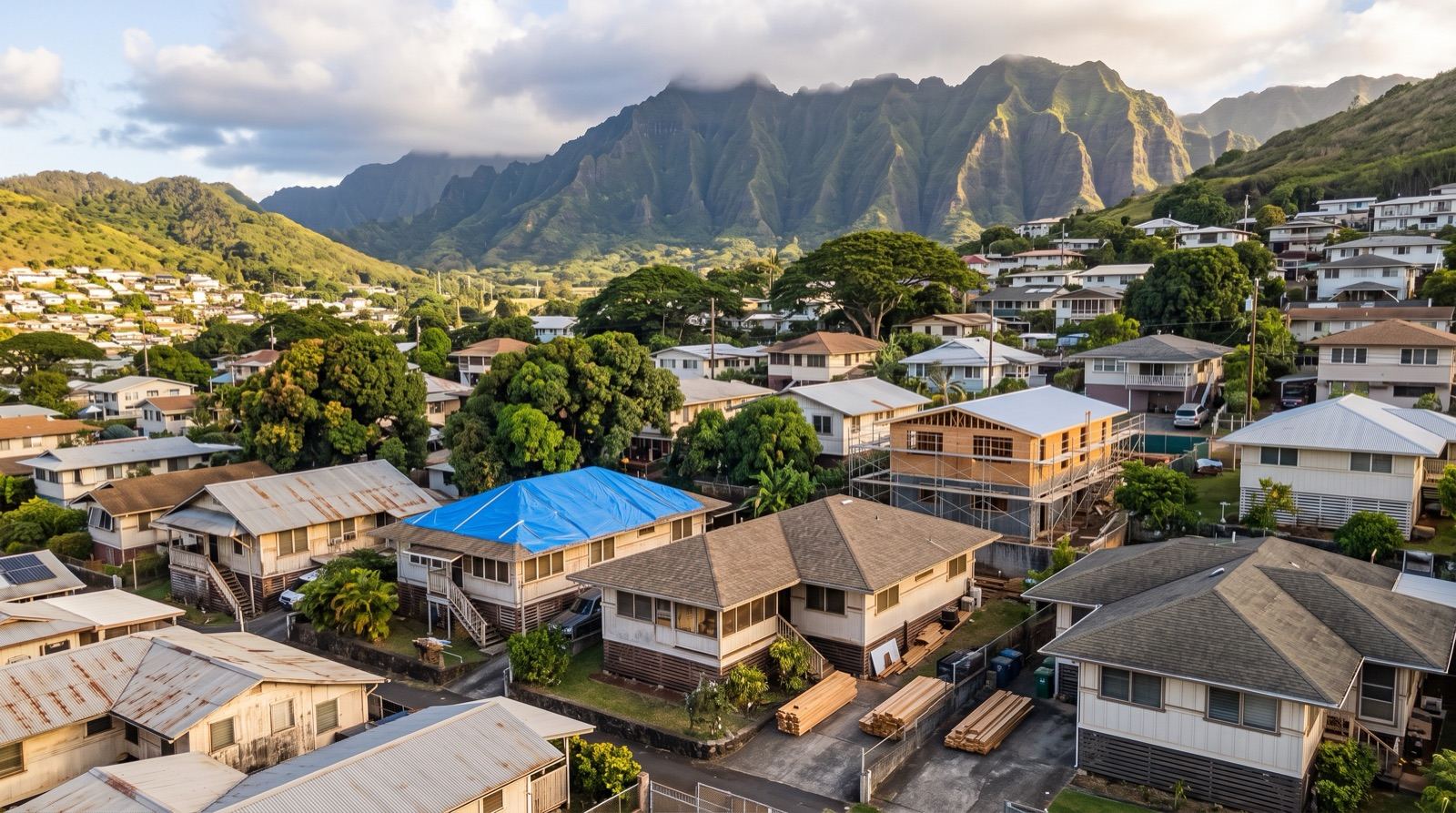
In our climate, that timing matters. A blue tarp buys you a few weeks, not a few months. Between the rain, the humidity and how fast mold moves in here, waiting on a check before fixing a roof or drying out a wall can turn a manageable repair into a much bigger one.
Yes, This Reaches Past Kauaʻi
Here's what Oʻahu homeowners should know: the program isn't limited to the Garden Isle. It's also open to owners on other islands whose homes were damaged in the recent storms.
And Oʻahu didn't come through untouched. Plenty of us lost power for a stretch, and the west side dealt with high surf and flooding along the highway. If your place picked up damage that's still stuck in the insurance process, this is one more option to look into.
Just remember that a HELOC is still debt secured by your home. Before signing anything, get the actual terms in writing, line them up against your insurance timeline, and make sure the payments fit your budget once the repair bills start landing. This is general information, not financial advice, so talk with a licensed lender about your own situation.
If your repairs need a building permit, build that wait into your plan too. We covered the current backlog in Honolulu's Permit Line Is Getting Longer.
What Kauaʻi Is Reminding the Rest of Us
Hurricane season runs through Nov. 30, so this is a good time for a quick check at home:
- Read your policy. In Hawaiʻi, hurricane coverage is often separate from a standard homeowners policy, flood usually needs its own policy, and hurricane deductibles can be higher than people expect. Condo owners should know where the association's master policy stops and their own coverage starts.
- Take photos now. A slow walk-through video of every room, plus the roof and yard, makes any future claim easier to document.
- Think ahead about access to cash. Lowell showed that credit tied to your home is easiest to set up while the house is in good shape.
There's also something reassuring about who's stepping up here. Finance Factors keeps a branch in Līhuʻe, recently hired Tron Rule, a lifelong Kauaʻi resident, as a loan officer to help run the program, and donated $5,000 to Nā Maka Onaona, a Kauaʻi nonprofit getting relief to families hit by the storms. When the people handling your recovery know your roads and your neighbors, it shows.
Kauaʻi will rebuild. It has before. For the rest of us, the lesson is simple: the best time to sort out your coverage, your photos and your backup plan is on a sunny Tuesday, long before the next storm shows up on the map.
Sources
- Pacific Business News: report on Finance Factors' Hurricane Lowell Recovery HELOC (October 5, 2026)
- Kauaʻi Now: KIUC outage update and Hawaiian Electric aid after Lowell (September 9, 2026)
- Hawaiʻi Public Radio: Oʻahu weathers Hurricane Lowell with flooding and power outages (September 8, 2026)
- County of Kauaʻi: Hurricane Lowell recovery and County services update (October 8, 2026)
- Hawaiʻi Department of Commerce and Consumer Affairs: Review insurance policies and deductibles ahead of hurricane season