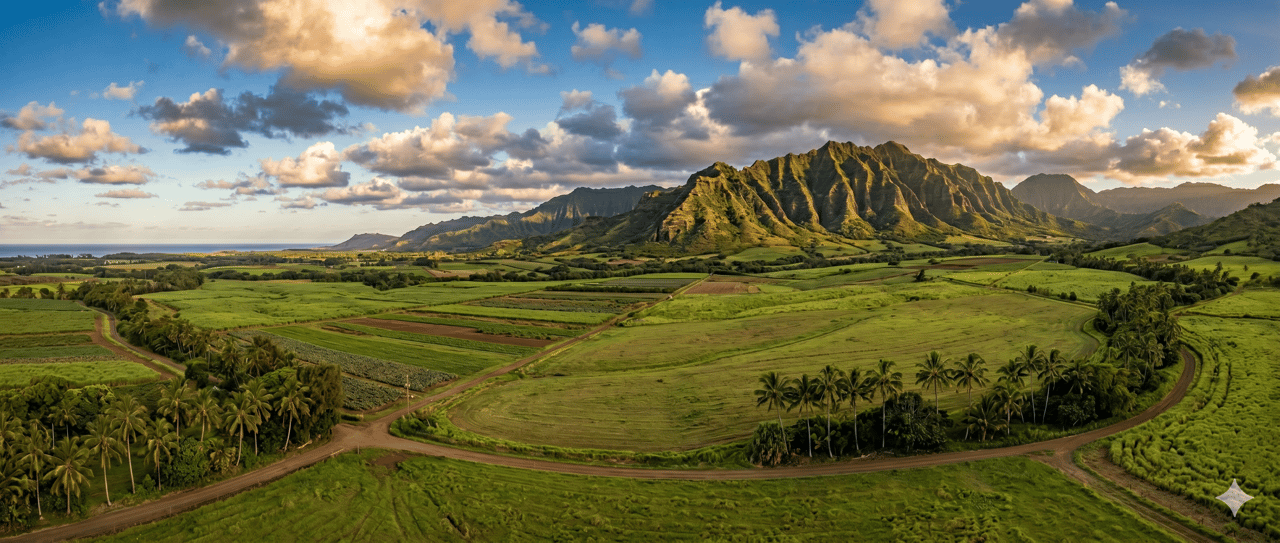
If you've made the drive past Kahuku lately — windows down, maybe a garlic shrimp plate in your near future — you've seen the open land rolling up toward the mountains behind Turtle Bay. It's green, it's quiet, and it's a big part of why the North Shore still feels like the North Shore.
That stretch of land just got some news worth paying attention to.
Nearly 400 Acres, New Hands
Host Hotels & Resorts, the parent company of the Ritz-Carlton Turtle Bay Resort, says nearly 400 acres of agricultural land mauka of the resort will now be managed by a Native Hawaiian-led group. The new venture is called Ono Small Pua‘a, created by Hui Ku Maoli Ola — a native plant nursery and restoration organization that's been doing this kind of work across the islands for years.
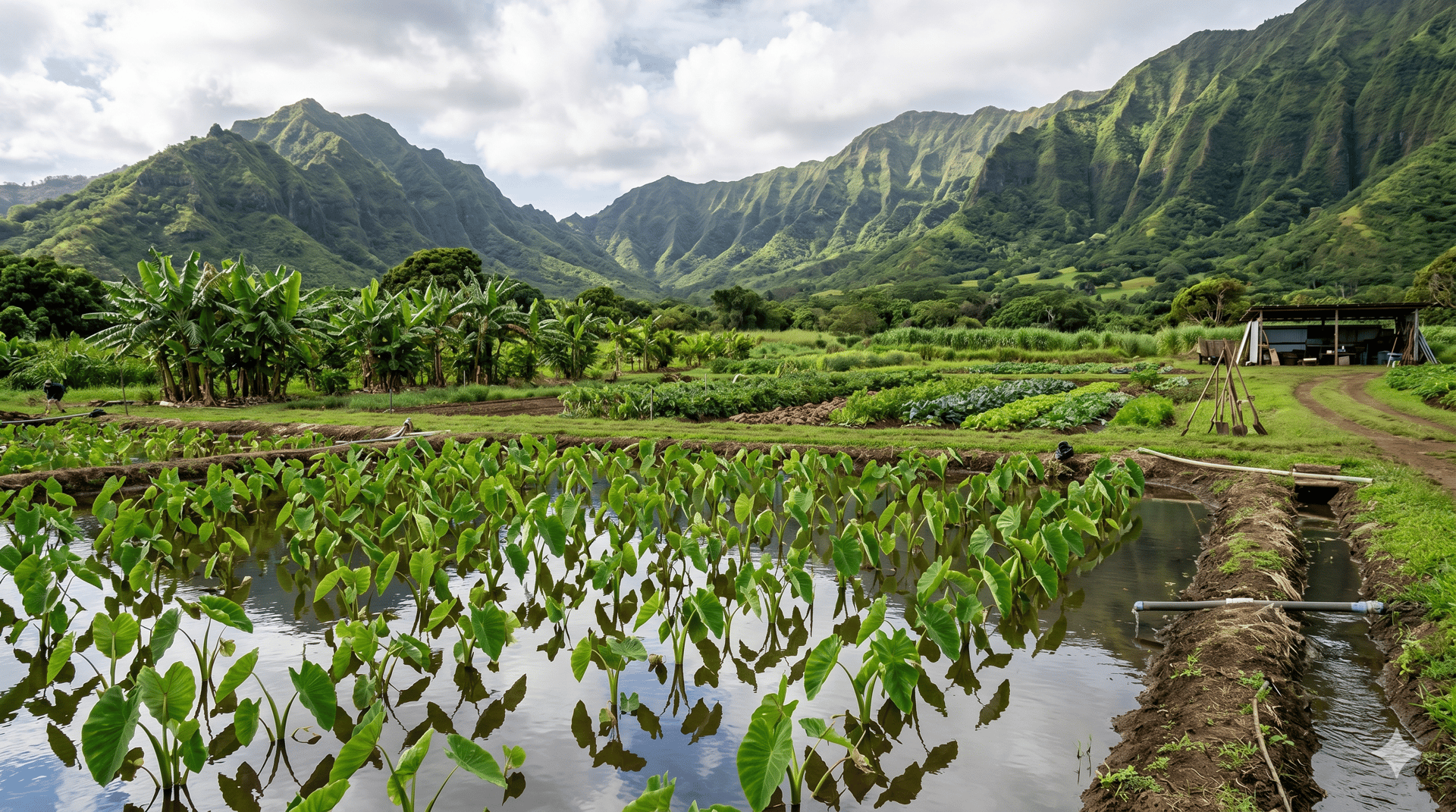
The goals are simple to say, even if the work is anything but: restore the land using Native Hawaiian agroforestry, support local kalo farmers, grow more food right here, and reconnect the land to its cultural and environmental roots. That means diversified crops, orchards, native plant restoration, and farm stands stocked with local producers.
Why It Hits Different When It Grows Here
Here's the part that matters for all of us, not just folks living out on the North Shore.
Hawai‘i imports most of what we eat. By most estimates, somewhere around 85 to 90 percent of our food rides in on a barge or a plane. We've all felt what that means — a shipping delay or a port slowdown, and suddenly the shelves look thin and prices creep up. Living in the middle of the Pacific is a gift, but it comes with a grocery bill and a supply chain that doesn't forgive much.
Land like this, kept in farming instead of paved over, is one small piece of a much bigger answer. Every acre growing kalo or fruit or vegetables here is one less thing we have to ship in. And when you can buy it at a farm stand down the road, that's about as fresh and as local as food gets.
Not Starting From Zero
This isn't a blank slate. The previous group managing the land, Pono Pacific Land Management, put in real groundwork — on-site farm stands, USDA food-safety certification earned by building a commercial wash-pack, farm-to-resort dinners with the resort's chefs, and retail offerings at Kuilima Farm.
So this is more of a handoff than a reset. Ono Small Pua‘a is taking a working foundation and steering it toward culture-first, regenerative farming. They're also teaming up with Kumano I Ke Ala and GO FARM Hawaii to bring in farmer training and workforce development — which means local people learning to work this land and build real careers on it.
What It Means If You Live Out Here — or Want To
The North Shore has spent decades fighting to keep the country country. Conservation easements, development battles, community pushback — a lot of that history comes down to protecting exactly this kind of open, working land.
If you live out toward Kahuku, Lā‘ie, or Hau‘ula, or you've ever daydreamed about it, decisions like this one shape the feel of a place as much as any home listing does. It's the difference between green hills and another parking lot. It's whether there's fresh food nearby, whether the views stay open, and whether there are jobs tied to the land your keiki might grow up working.
A house is never just a house. It's the road you drive home on, the farm stand you stop at on the way, and the character of everything around it. Out here, that character is tied to land staying in the hands of people who actually want to grow something on it.
The Long View
The drive out to the North Shore will look about the same next month as it did last month. But knowing what's taking root up in those hills — kalo going back into the ground where it belongs, local farmers getting trained, native plants coming home — makes that open green feel a little more grounded.
Land returning to its purpose has a way of reminding you what makes a place worth calling home in the first place.