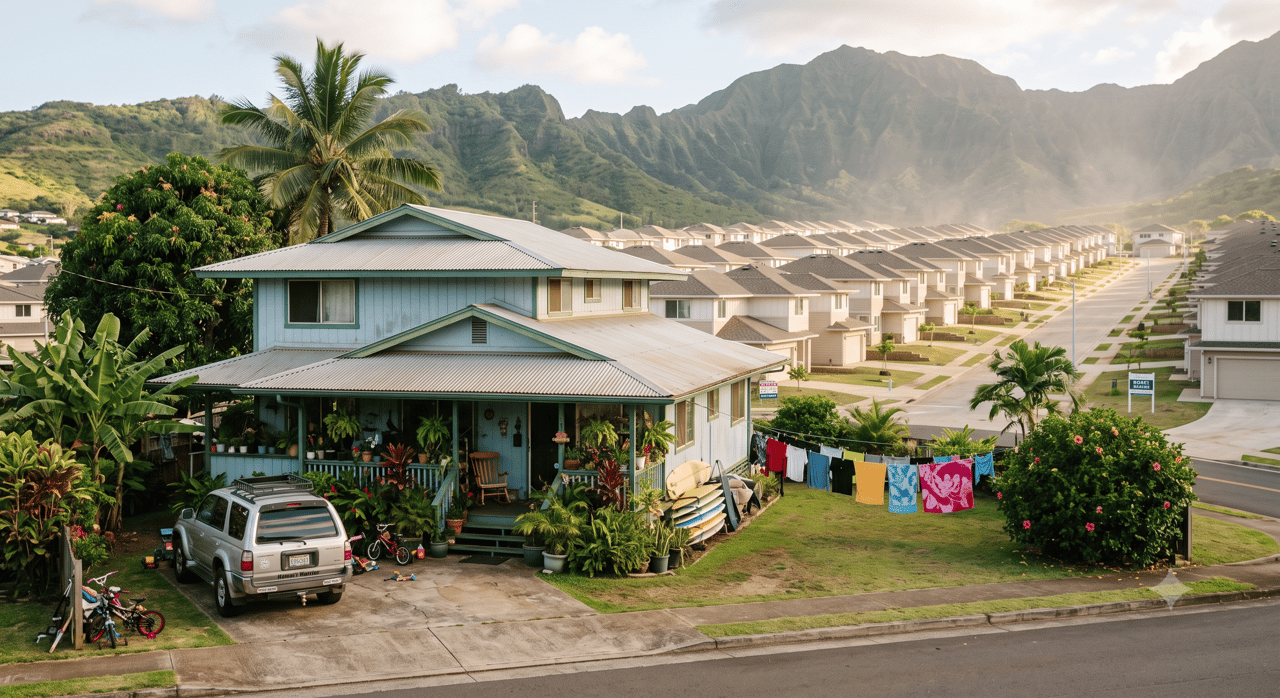
There's a new housing law on the books, and it's a big one. The 21st Century Road to Housing Act became law on July 10, and now that the full text is out, there's a lot more in it than the early headlines let on.
If you've watched an empty lot sit fenced off for years around here, you know why any law aimed at building faster gets our attention. So let's walk through what actually made it in, and what it might mean for us.
Law Now, No Signature Attached
The bill became law without President Trump's signature. He called off the planned signing in late June, but because Congress was in session and he didn't veto it, the clock ran out and it took effect anyway — about ten days later.
Economists are calling it one of the biggest housing bills in decades, and the reason is the approach. Instead of throwing money at buyers to juice demand, it goes after the supply side — the permitting, zoning, and review hurdles that keep homes from getting built. As one chief economist put it, the law finally treats affordability as a supply problem. Which is exactly the problem we have on O‘ahu.
A Leash on the Big Landlords
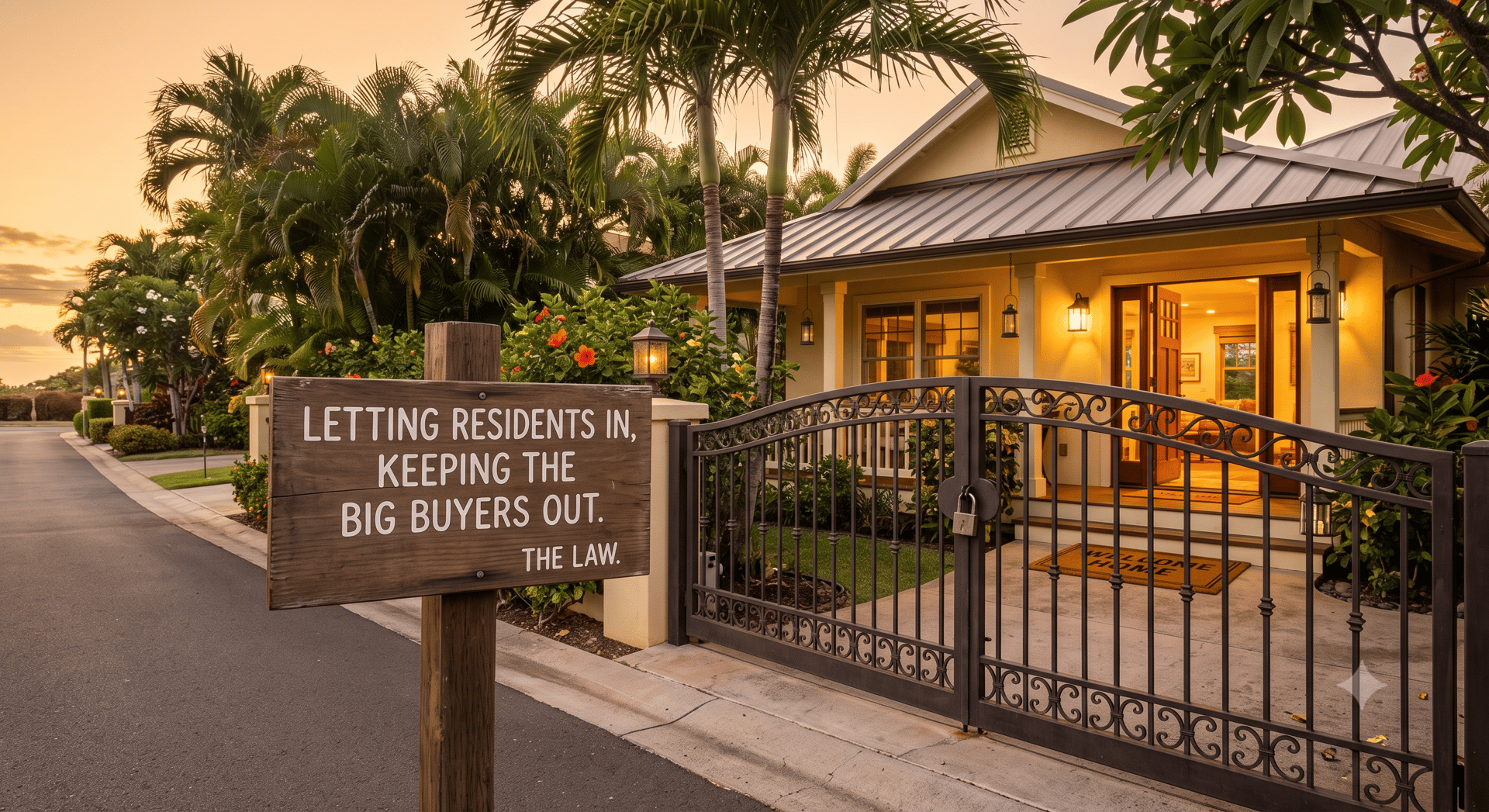
The provision getting the most attention nationally is a cap on giant investors. The law blocks investors who own 350 or more single-family homes from buying up more, with some exceptions.
Here's context that surprised me: most investor-owned homes aren't held by hedge funds. About 87% belong to small investors with one to five properties, and the mega-landlords with 1,000-plus homes make up only around 2%.
On O‘ahu, the Wall Street landlord isn't really our biggest competitor — it's out-of-state buyers and second-home money bidding against local families. This cap won't change that overnight. But the frustration it's responding to? We know it well.
Clearing the Path to Build
A big chunk of the law is about making it easier and cheaper to build. A few pieces that could matter here:
- More homes by right — a new seven-year pilot rewards communities that let people build duplexes, triplexes, and fourplexes without a fight, or that ease off-street parking rules that quietly drive up costs.
- Pattern books — grants to help towns pre-approve housing designs so builders aren't starting from scratch, and waiting years, on every project.
- Fewer redundant reviews — streamlined environmental steps to shave time off the pipeline.
- Factory-built homes — updated FHA lending rules and a HUD study on financing manufactured and factory-built housing, which tends to go up faster and cheaper than stick-built.
- Empty buildings, reused — a pilot to turn vacant and abandoned buildings into housing. Look at our quiet retail and office space and you can see the appeal.
So Will It Actually Help?
Honestly? Not fast.
The law leans on $200 million in annual competitive grants for local governments and tribes that grow housing supply, and it lets HUD favor projects in Opportunity Zones when handing out its roughly $5 billion in yearly grants. That's real money on the table. But one real estate attorney watching the bill was blunt: people expecting a quick drop in home prices will be disappointed.
For perspective, the national median home price sat around $403,000 early this year. Out here, that number wouldn't get you close to a single-family home — we're one of the many places where even a "starter" home runs past a million. A federal law doesn't erase that math.
What it does do is hand our state and county leaders more tools, and put money behind the places that actually build. The open question — the one economists keep circling back to — is whether local governments and the private market here reach for those tools or let them sit. That part isn't up to Washington. It's up to us. And if you've been on this island long enough, you know we tend to move at our own pace.