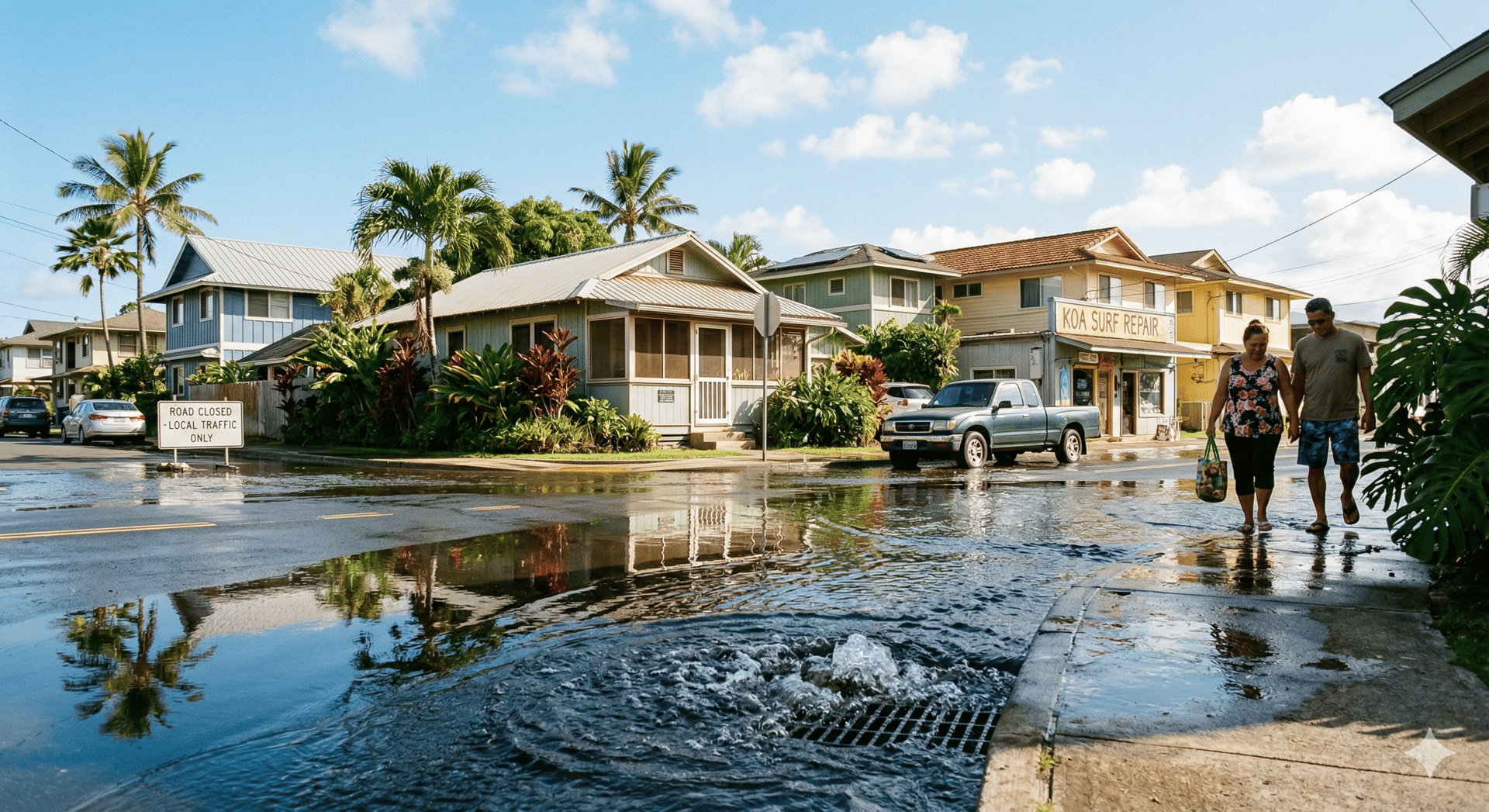
If you’ve driven down Nimitz Highway during a king tide or watched the shoreline inch closer to Kam Highway out in Hau‘ula, you already know the ocean is boss around here. We love living in Hawai‘i because of the water, but lately, that water is getting a little too close for comfort.
Sea-level rise isn't just a talking point for the future anymore; it's a right-now issue that is actively reshaping the O‘ahu real estate market and our local economy. In fact, even before recent major storms hit, over 39% of Hawai‘i residents said they were already dealing with increased costs related to sea-level rise and coastal flooding.
The Sitting Duck: Waikīkī’s $5 Billion Dilemma
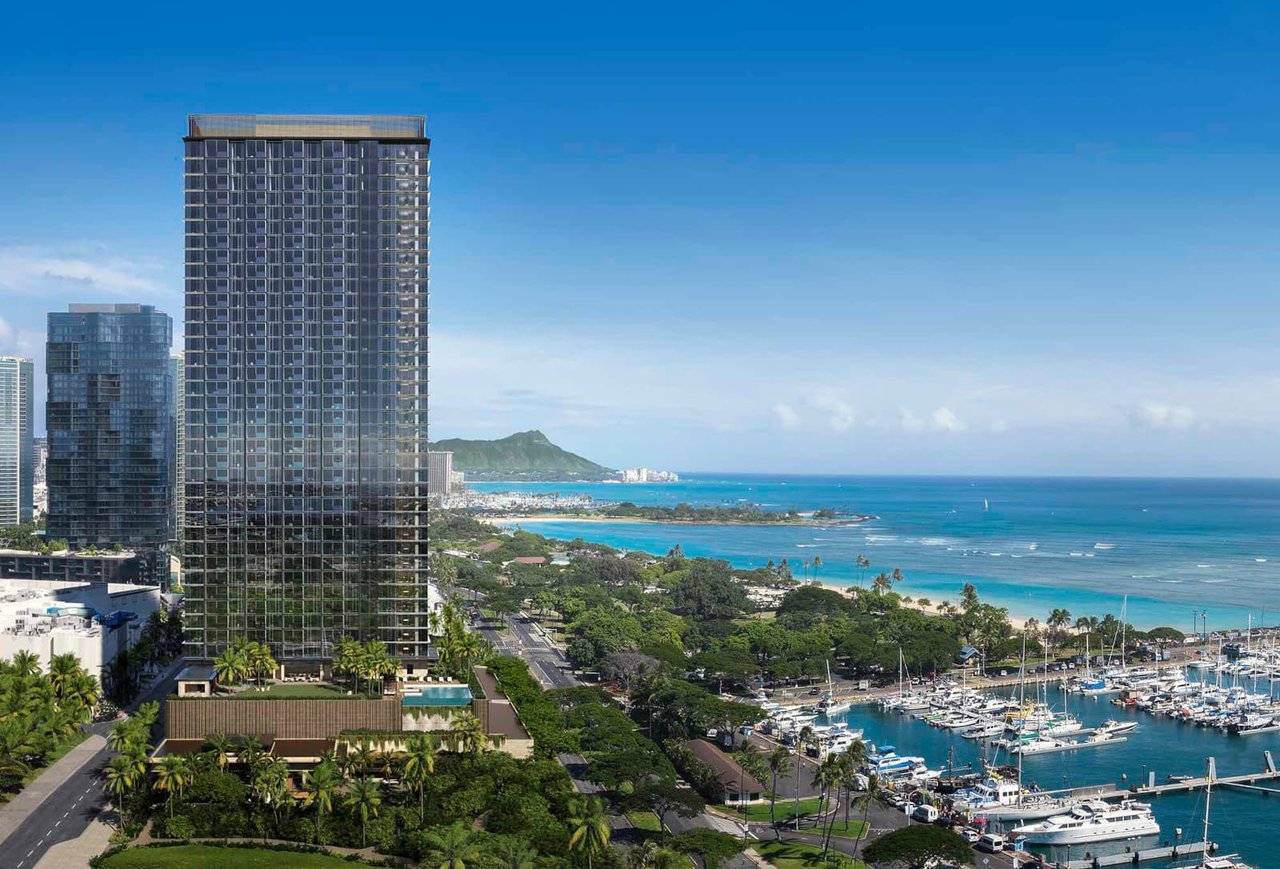
When we talk about the local economy, all roads inevitably lead to Waikīkī. This roughly two-square-mile stretch of world-famous hotels and beaches produces 8% of Hawai‘i's gross state product, generating an absolutely massive $5 billion annually. Because it is essentially flanked by water, those properties are staring down an existential threat from rising sea levels.
Waikīkī is uniquely vulnerable because it’s getting hit from all sides. It's not just the beach washing away. Experts have found that the local storm drain systems are already filling up with saltwater. When a heavy rainstorm hits and the drains are plugged by the ocean, the drainage fails. Add in groundwater inundation—where underground water tables overflow—and the compounding effect of ocean waves pushing inland, and you have a recipe for severe flooding.
Because of its economic weight, Waikīkī is becoming the state's testing ground for sea-level rise solutions. But the fixes are incredibly complicated. For example, you might think the easiest solution is to just raise the roads. However, if you raise a street next to a building, the ground floor suddenly turns into a basement. Because basements can't be insured, all the ground-floor commercial shops next to those elevated sidewalks would become totally uninsurable.
Architects are currently looking into massive structural changes, like raising the oceanfront lobbies of major resorts so they can survive longer while maintaining a good guest experience.
Big Money Moves vs. Local Realities
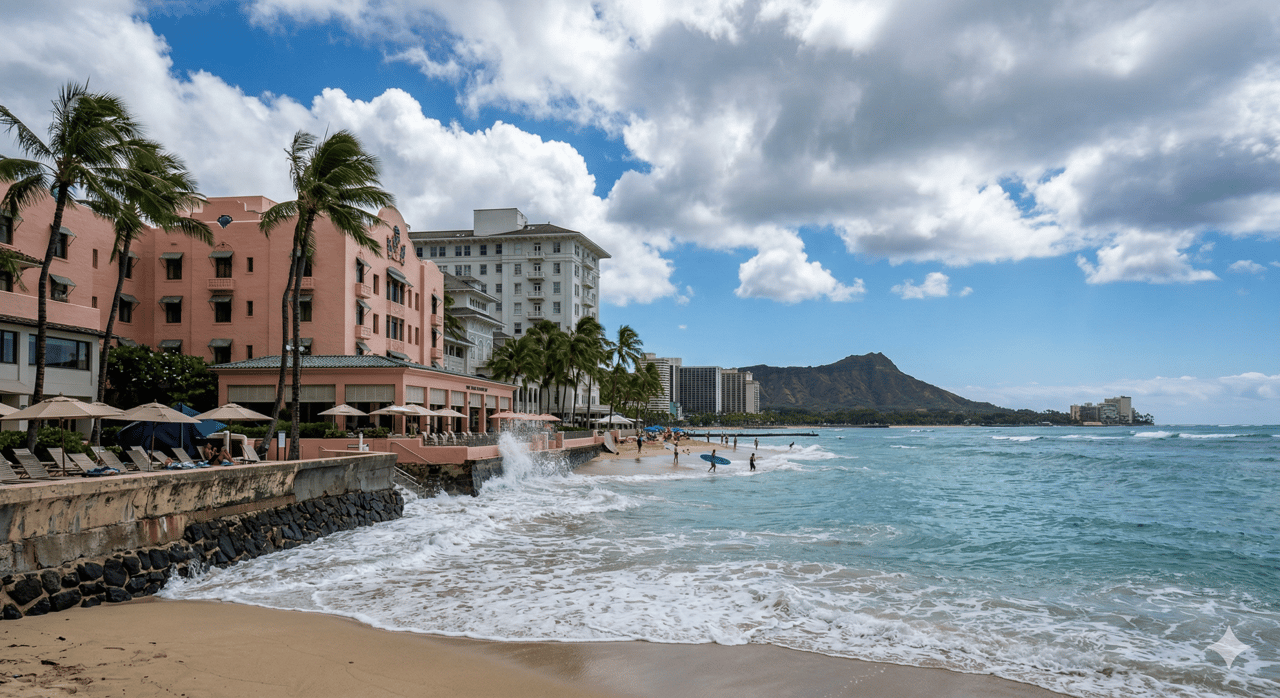
The writing is on the wall, and major players in the local real estate market are making moves. Recently, Kamehameha Schools sold the land under the iconic Royal Hawaiian Resort in Waikīkī for $510 million. While the trust hasn't explicitly tied the sale to sea-level rise, everyone knows the beach erosion directly in front of the property has been a creeping issue for a long time. Keeping that specific stretch of beach functional has required serious state intervention, including hauling in nearly 400,000 cubic yards of offshore sand to build a protective basin.
But here’s the harsh reality for the rest of us: pulling up 400,000 cubic yards of sand isn't an option for your average local homeowner in ‘Ewa Beach or a small community organization.
Take the historic Paia Mantokuji Soto Mission over on Maui. The ocean is slowly eating away the land right underneath their temple. While experts have suggested deconstructing and moving the building or fortifying its basement, those solutions cost a fortune—money that smaller landowners simply struggle to secure.
Adapting to the New Normal
It’s no surprise that locals are feeling anxious about the road ahead. A recent survey found that 68% of O‘ahu residents feel the state is "somewhat" or "not at all prepared" for the incoming impacts of sea-level rise. On the neighbor islands, the worry is even more intense—86% of Kaua‘i residents and 84% of Maui residents believe the impact over the next 50 years will be catastrophic.
Major corporate landowners like Maui Land & Pineapple are actively acknowledging that our historic droughts and damaging floods are forcing them to reshape how they plan for the future.
For local families looking to buy or hold onto real estate in Hawai‘i, this changing landscape means we have to be smarter than ever. Whether it’s double-checking flood zone maps, understanding shoreline setback rules, or just knowing the history of high tides in a specific neighborhood, adapting is just part of island life now. We can't stop the ocean, but with a little foresight and community planning, we can make sure our homes and our economy stay above water.