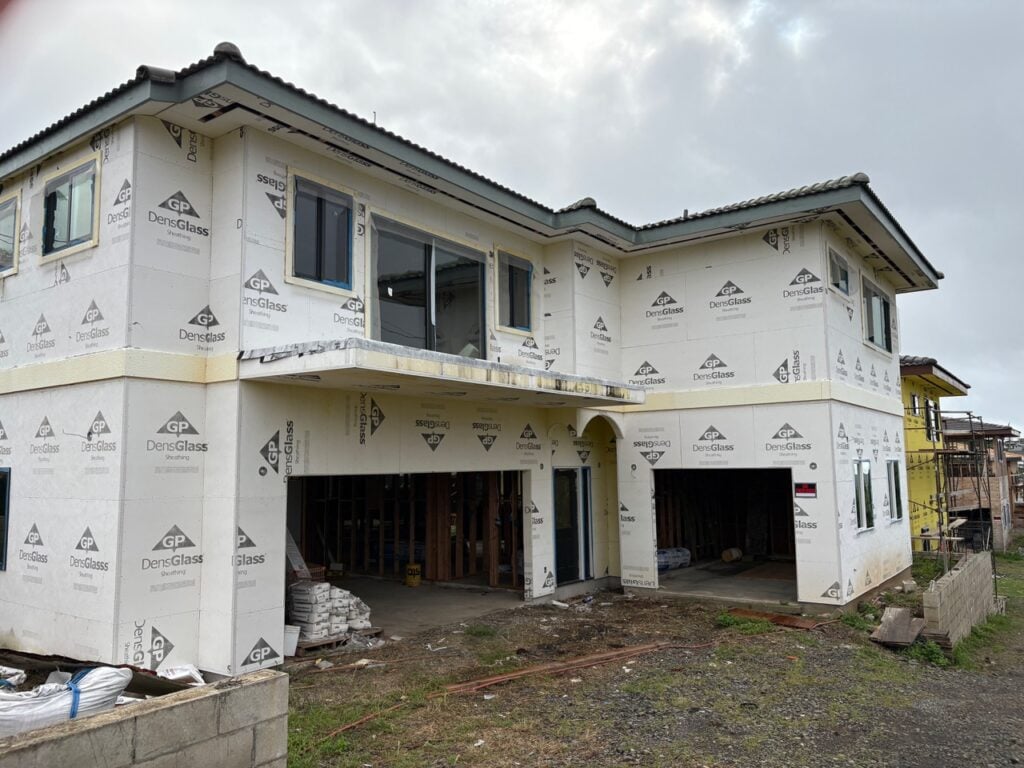
If you’ve driven up Sierra Drive in Kaimukī lately, you probably noticed the tall weeds and the "zombie" state of the massive construction project at 3615 Sierra Dr.. For five years, it stood as a symbol of the neighborhood’s fight against "monster houses"—those oversized residential structures that look more like apartment complexes than family homes. Neighbors even hosted "not-so-happy hours" on the sidewalk to protest the scale of the three large, two-story buildings.
But just when the community thought the project was dead, it’s back to life. On January 30, 2026, the city’s Department of Planning and Permitting (DPP) gave developer Christy Zeng Tong the go-ahead to finish the projec
How a "Monster" Shrinks on Paper
You might be wondering how a project that had its permits revoked in 2022 and lost an appeal in 2024 is suddenly "good to go". The footprint of the buildings hasn’t actually changed. Instead, the developer made a few strategic adjustments to meet O‘ahu’s Floor Area Ratio (FAR) limits—the rule that says under-roof living space can’t exceed 60% of the lot size.
In the case of the Sierra Drive property, the "living space" was reduced from 13,094 square feet to 11,187.5 square feet. How? By turning nearly 2,000 square feet of former living area into garages. Under city ordinances, garages, basements, and lanais don’t count toward the FAR limit. Additionally, the developer reduced the number of bathrooms from 17.5 down to 16—meeting the limit of four bathrooms per unit.
For neighbors like architect Stephen Yuen, the change feels more like a technicality than a solution. As he put it, "On paper the project shrank; on the ground it did not".
The Reality of Development Loopholes
This isn’t Tong’s first rodeo. Known as one of O‘ahu’s most prolific developers in this niche, she has faced dozens of violations across various properties over the years. While she maintains she is simply trying to build homes for her extended family and follow the rules, the Sierra Drive project highlights a major point of frustration for local residents: the "garage exemption" workaround.
The concern shared by both neighbors and City Council Chairman Tommy Waters is that once a certificate of occupancy is issued, there is very little to stop a developer from eventually closing in those massive garages and turning them back into living suites. It’s a game of "whack-a-mole" that has left many in the Kaimukī community feeling discouraged.
What This Means for O‘ahu Neighborhoods
This case is a wake-up call for how land use is managed in our older, established neighborhoods. Kaimukī is beloved for its character, small lots, and "old Hawai‘i" feel. When projects of this scale are approved—even if they technically meet the letter of the law—they strain local infrastructure, increase street parking issues, and change the visual landscape of our hillsides.
The city is listening, though. Following the recent approval, Chairman Waters and DPP Director Dawn Takeuchi Apuna have both expressed interest in new legislation specifically designed to prevent these extensive garage-space workarounds.
For now, the scaffolding is back up on Sierra Drive. As we keep an eye on these new developments, it’s a reminder that being an engaged neighbor matters. Whether it's showing up to a "not-so-happy hour" or keeping tabs on DPP permit filings, staying informed is the first step in protecting the places we call home.
-Daniel Ulu
source: civil beat