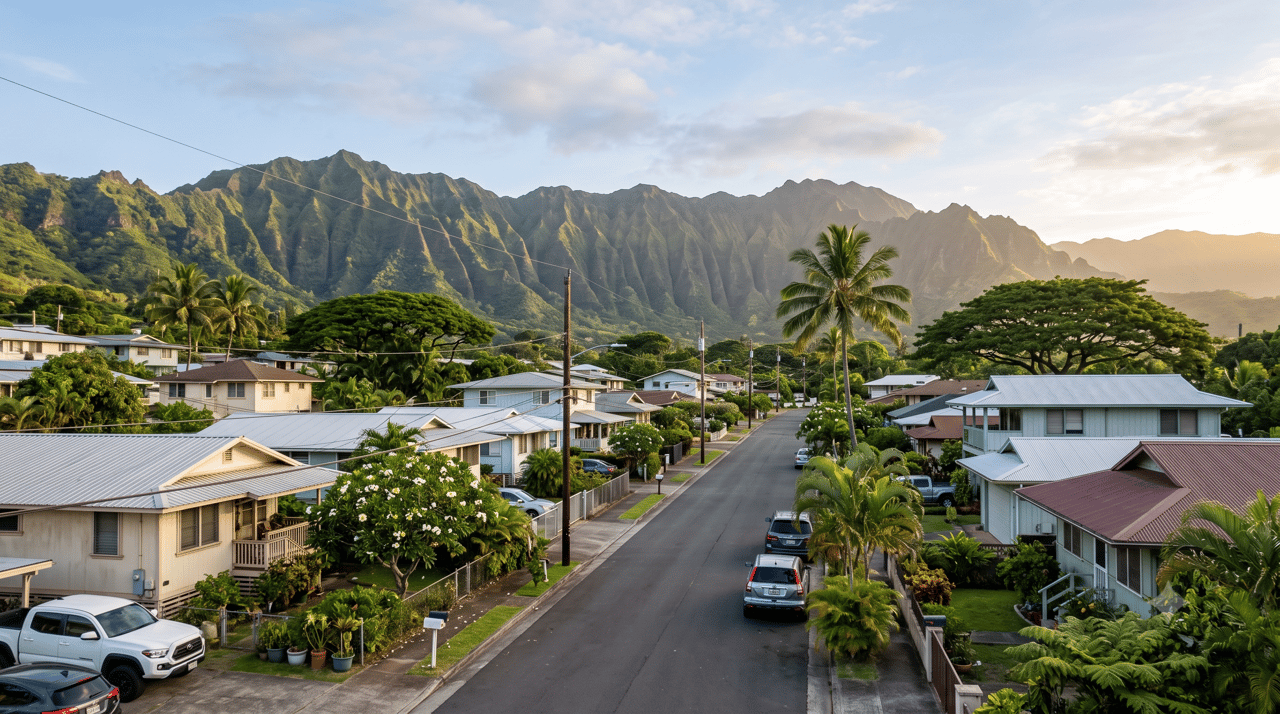
Saving up might be the hardest part of buying a home on Oʻahu. You can find a place you love, picture your keiki in the yard, and pencil out a monthly payment that almost works — then run into the same wall everyone here runs into: the down payment. With the median single-family home on Oʻahu hovering around $1.17 million these days, that first pile of cash is the real gatekeeper.
So it's worth a look when the state quietly hands first-time buyers a bigger tool for that exact problem. A savings program that's been sitting mostly untouched since 1982 is finally getting an upgrade.
The account that time forgot
Back in 1982, Hawaiʻi set up something called the Individual Housing Account. The idea was simple and honestly pretty smart. A first-time buyer could stash money in a dedicated savings account, deduct those contributions from their Hawaiʻi state gross income, and later put the savings toward the down payment or closing costs on a primary home here in the islands.
The problem was the cap. Individuals could only put in $5,000 a year, and that number never budged. In 1982, five grand was a real chunk of a down payment. Forty-four years and a whole lot of price appreciation later, $5,000 against a $1.17 million home is barely a fraction of a percent — a nice start, and not much more.
From $5K to $20K, the math finally moves
That's what Senate Bill 2552 changes. Starting January 1, 2027, the annual contribution cap jumps from $5,000 to $20,000 for individuals, and from $10,000 to $40,000 for married couples filing jointly. Four times higher across the board. It's the first time the cap has moved since the program started.
The bill hasn't landed on Governor Green's desk with a signature yet, but it wasn't on his intent-to-veto list, so it becomes law either way. Once it's official, participating banks and credit unions can start offering the updated accounts on that January 1 date.
Here's why quadrupling actually matters. Every dollar you contribute comes off your state taxable income, so a bigger cap lets you shelter four times as much each year while you build your fund. Stack that over a few years of steady saving and you've got real down-payment money — with a tax break riding along the whole way.
One rung, not the whole ladder
Nobody's claiming this fixes affordability, and the people who pushed for it are refreshingly clear about that. Lyndsey Garcia, who runs advocacy for Hawaiʻi Realtors, told Pacific Business News that the win isn't only the higher cap — it's reviving a program that barely got used because its old limits were so tight. The hope is that a modern number brings more people in.
Gina Duncan, this year's president of the Hawaiʻi Association of Realtors, put it in plain terms: the program won't solve the housing crisis, but it's one more way for a first-time buyer to reach that first rung of the ladder. Fixing housing out here takes a lot of tools working together. There's no single fix.
That squares with what we see every day. Between high prices, HECO bills that can run past $400 a month, and the general cost of everything on-island, saving money is its own second job. A program that lets you save a little faster and a little smarter won't move the median price — but for someone grinding toward a first down payment, it's a genuine tailwind.
Worth a conversation before January
If you're a first-time buyer eyeing a purchase in the next few years, this is worth a couple of questions now. Ask your bank or credit union whether they plan to offer the updated Individual Housing Account, and talk with whoever handles your taxes about how the state deduction fits your picture. It's a Hawaiʻi program, so you want someone who knows local rules, not a generic mainland calculator.
None of this is a drop-everything-today situation — the change kicks in January 1, 2027 — but it's the kind of thing that's easy to set up early and be glad about later.
No single program is going to crack Oʻahu's affordability puzzle, and this one won't either. What it does is make one hard part — building that first pile of savings — a little easier and a little more worthwhile. A cap that sat frozen for 44 years finally caught up with the islands it was built to serve. For anyone slowly stacking toward a down payment, that's a small but real step in the right direction.