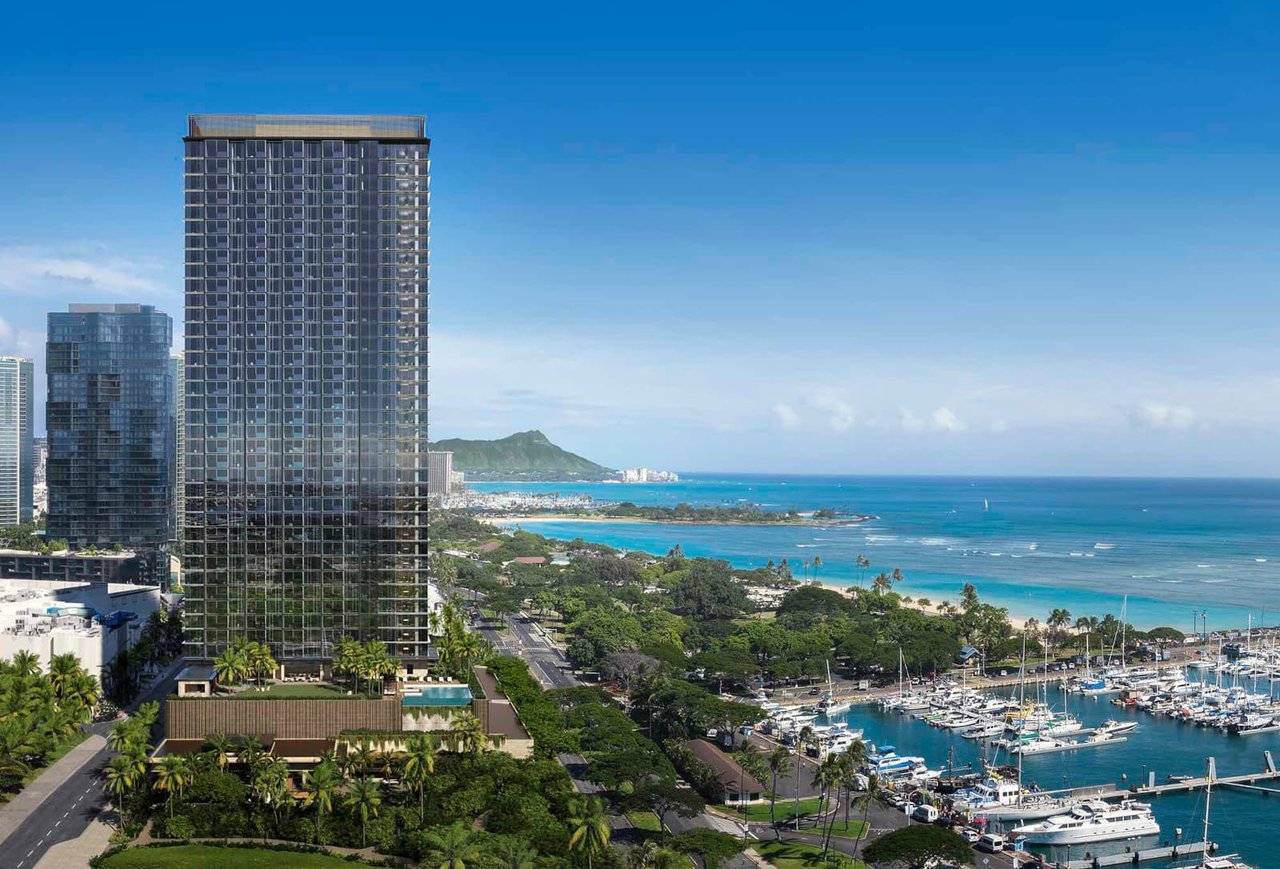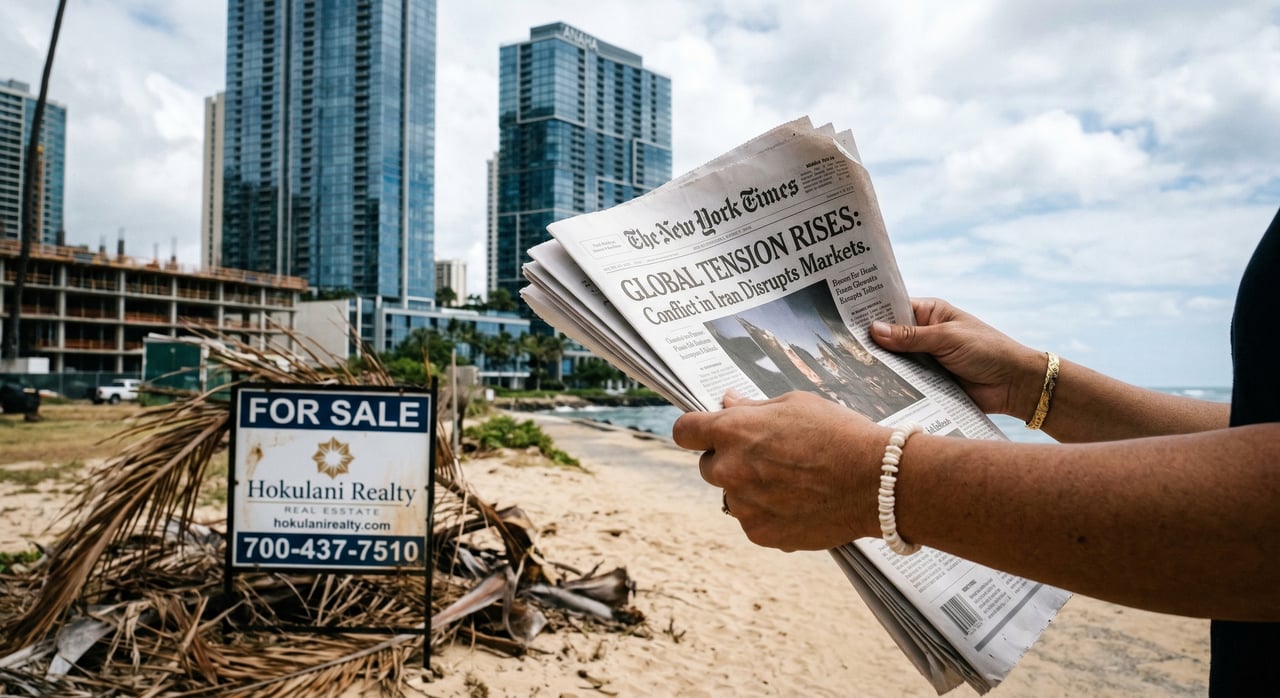
If you’ve been scrolling through the news lately, it’s hard to ignore the heavy headlines coming out of the Middle East. With the outbreak of the 2026 Iran war and the recent strikes on energy infrastructure in the Strait of Hormuz, the world feels a lot smaller—and a lot more expensive. For those of us here on O‘ahu, it can feel like these events are a world away. But while we’re separated by thousands of miles of ocean, our local real estate market is tied directly to these global shifts.
Whether you’re eyeing a new build in Ho‘opili, looking for a condo in Kaka‘ako, or trying to upgrade in Kailua, the conflict is ripple-effecting its way into your wallet. Let’s break down exactly how this “world news” is becoming “neighborhood news.”
The Mortgage Rate Seesaw
Just a few weeks ago, we were all breathing a sigh of relief. Mortgage rates had finally dipped below the 6% mark for the first time in years. There was a sense that the "logjam" in our market was finally starting to break.
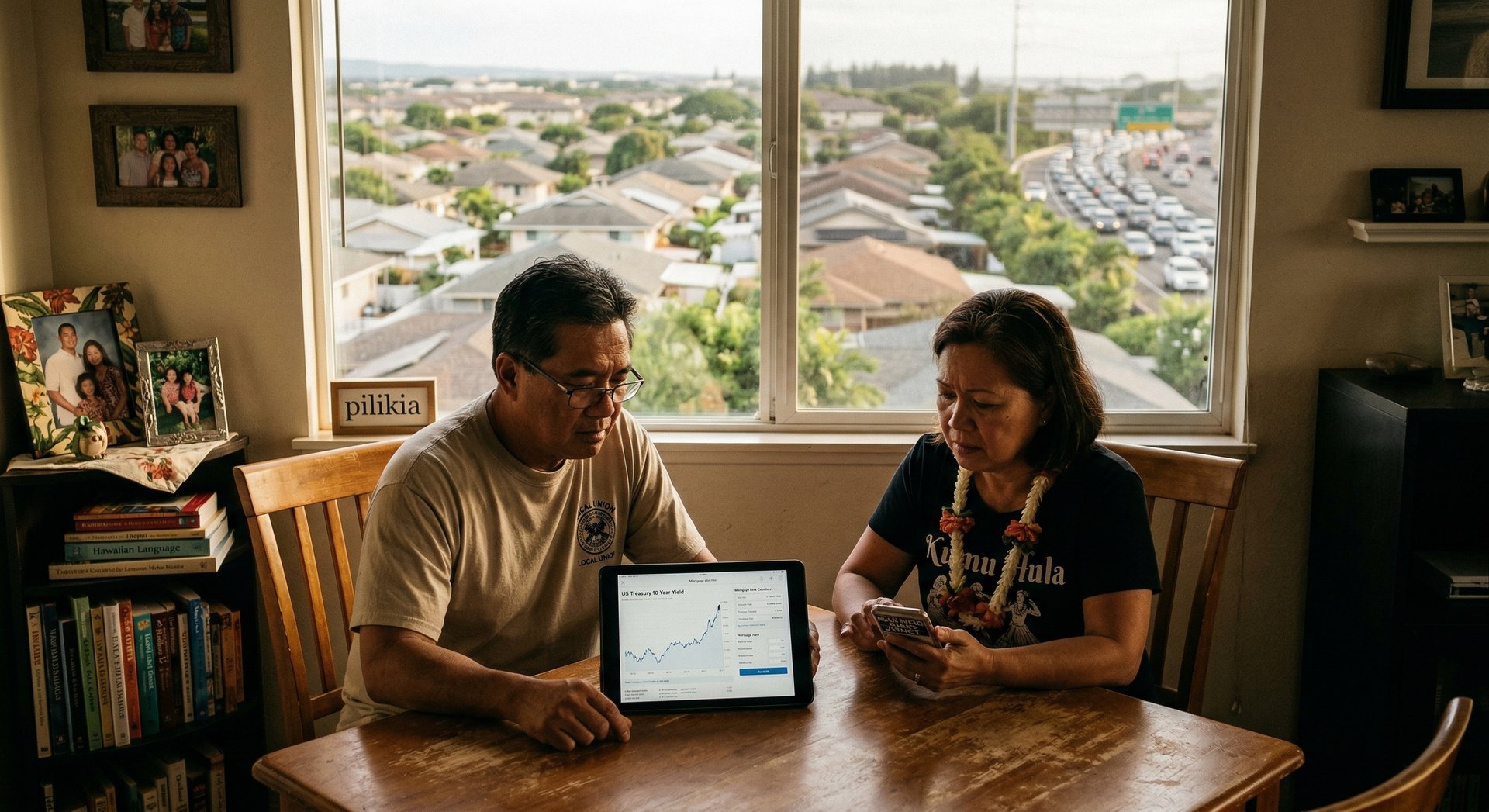
Then came February 28th. The start of the conflict and the subsequent spike in oil prices sent the bond market into a tailspin. Because mortgage rates tend to follow the 10-year Treasury yield, which is sensitive to inflation and energy costs, we saw a sudden and sharp reversal. As of mid-March 2026, the average 30-year fixed rate has jumped back up to around 6.22% to 6.40%.
For a local family looking at a median-priced home on O‘ahu, that seemingly small jump in percentage can mean hundreds of dollars more in a monthly payment. It’s the difference between "let’s make an offer" and "let’s wait and see."
O‘ahu’s Record-Breaking Resilience
You might think that global war and rising rates would cool off prices, but O‘ahu is a different animal. Even with the geopolitical jitters, our island’s housing market remains incredibly tight.
In February 2026, the median sales price for a single-family home on O‘ahu hit a record high of $1,205,000. That’s a nearly 2% increase from last year. Why is this happening despite the war? It comes down to our perennial problem: inventory.
We aren't making more land, and our supply is still nowhere near meeting the demand. Single-family homes are currently flying off the market with a median of just 17 days. While the conflict might make some buyers hesitate, the lack of available homes in neighborhoods like Waipahu or ‘Aiea means that when a good house pops up, people are still moving fast to secure it.
A Tale of Two Markets: Homes vs. Condos
If you’re feeling priced out by the million-dollar-plus single-family market, there is a silver lining in the condo segment. While the "war-flation" is pushing rates up, the condo market on O‘ahu is actually giving buyers a bit more breathing room.
-
Single-Family Homes: High demand, low inventory, and prices holding at record highs. Sellers still have the upper hand here.
-
Condos: Inventory is up significantly. The median price for a condo is hovering around $500,000, and they are sitting on the market longer—about 56 days on average.
With insurance costs rising locally for older buildings, we're seeing more room for negotiation in the condo space. If the global conflict has you worried about your budget, looking at a townhome in ‘Ewa Beach or a mid-rise in Makiki might offer a more stable entry point right now.
The "Cost of Living" Kicker
We can't talk about a war in the Middle East without talking about the pump. Hawai‘i already has some of the highest electricity and gas prices in the nation. With Brent crude oil flirting with $115–$118 a barrel due to the conflict, we can expect our everyday costs to climb.
For many O‘ahu residents, this "inflationary pressure" is the real impact. When it costs more to fill up the truck to get to work or to keep the AC running during a humid Kona wind day, that’s less money available for a down payment or a monthly mortgage. It’s a reminder that our local economy is deeply sensitive to anything that disrupts shipping or energy.
Looking Ahead: Stay Calm, Stay Local
It’s easy to get overwhelmed by the "what-ifs" of a global conflict. Will the Fed cut rates later this year? Will oil prices stabilize? The truth is, nobody has a crystal ball.
What we do know is that O‘ahu real estate has historically been a very safe place to park your money. We’ve seen through the pandemic and various economic cycles that people always want to live in Hawai‘i. Our military presence, while a factor in regional security, also provides a consistent floor for our local economy and rental market.
If the house you’re looking at makes sense for your family and your budget today, don't let the headlines scare you into paralysis. But if you’re a seller, realize that buyers are more rate-sensitive than they were a month ago. Pricing your home accurately is more important now than ever.
The "New Normal" for 2026 seems to be volatility. We’ll keep an eye on the Strait of Hormuz, but we’ll keep our feet firmly planted on O‘ahu soil.