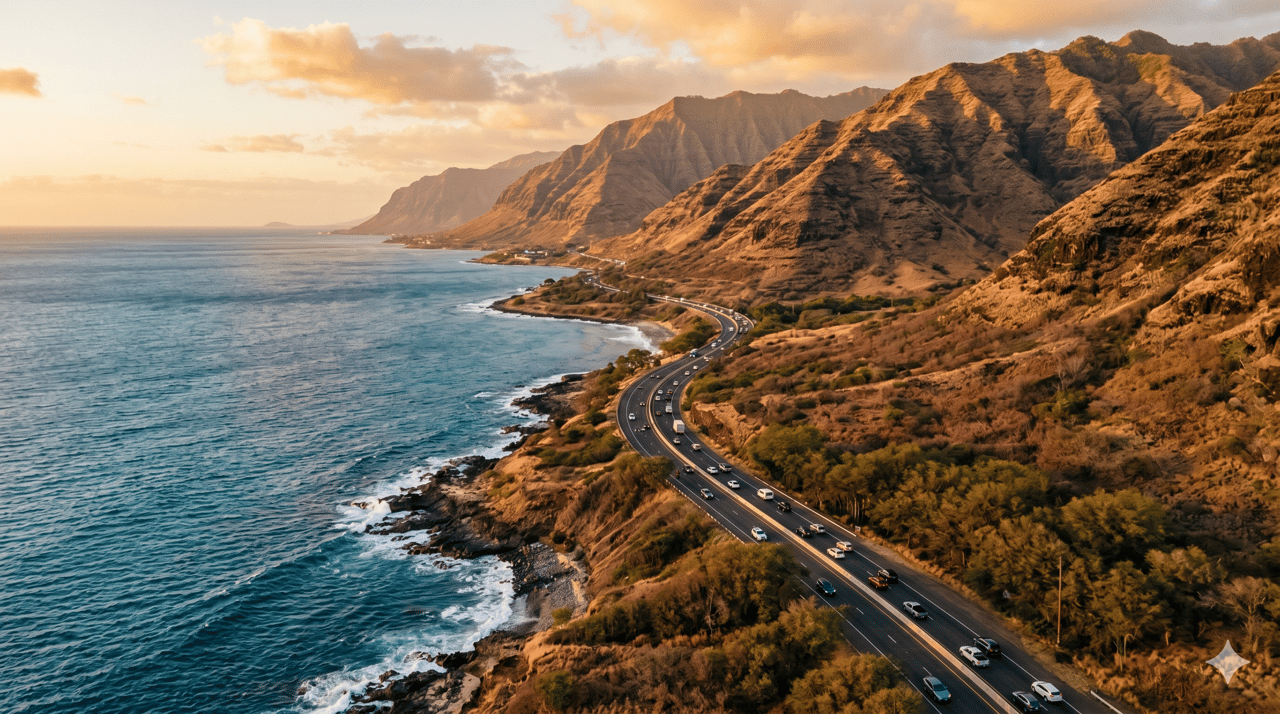
If you live anywhere along the Wai‘anae Coast, you already know the routine. There's basically one road in and one road out, and that road is Farrington Highway. On a good morning it just crawls. On a bad one — a fender bender near Nānākuli, a closed lane, a little rain — the whole coast backs up, and a drive that should take half an hour turns into something you'd rather not relive.
So when the state put real money behind fixing it, people out West paid attention.
What $27 Million Actually Buys
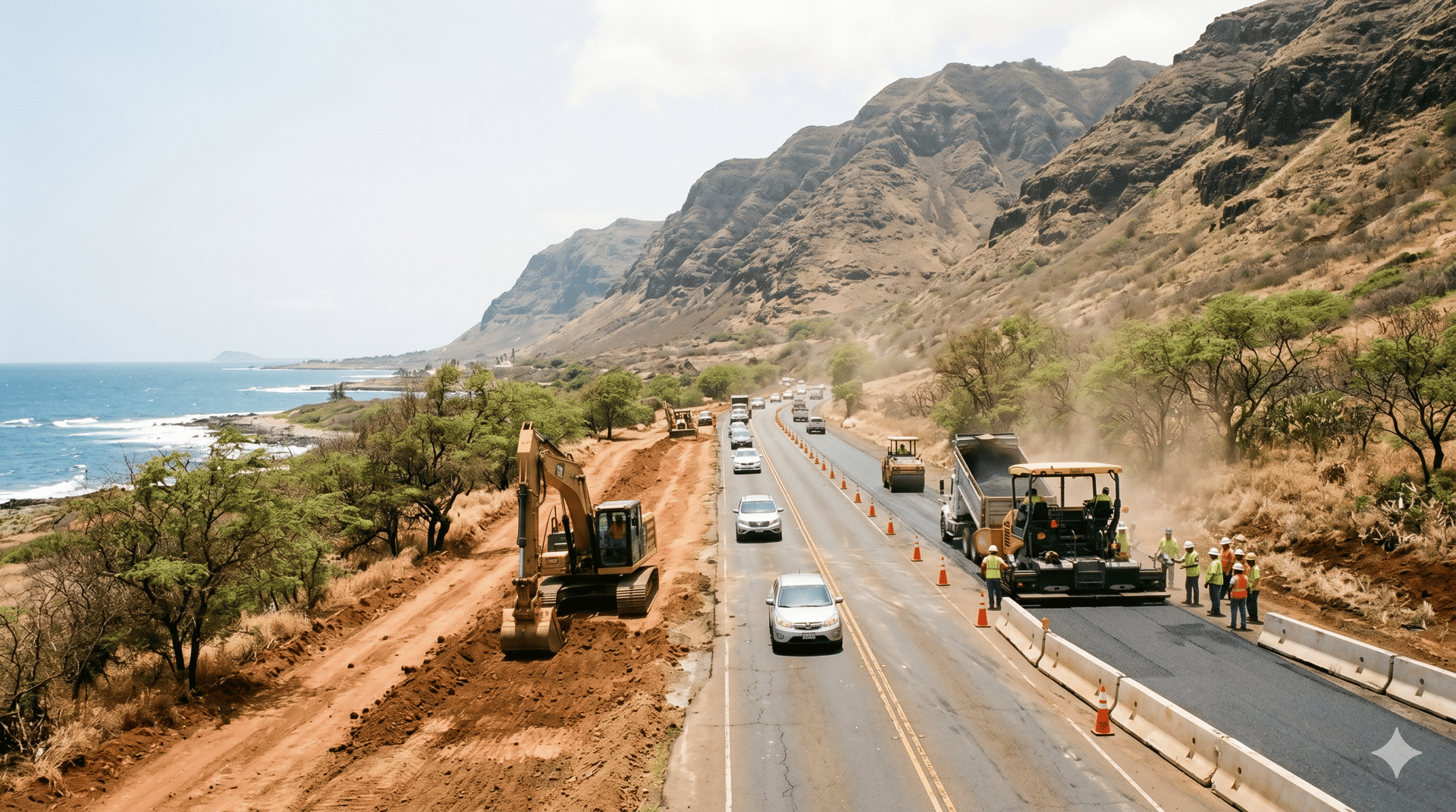
State lawmakers approved $27 million for the first phase of a long-planned effort to widen and modernize Farrington Highway. The money covers the full front end — land, planning, design, and construction — for upgrades that could include a fifth lane, new traffic signals, better sidewalks, drainage work, and added pedestrian safety features.
The headliner for phase one sounds small but isn't: dedicated turning lanes through two intersections in Nānākuli. A lot of the daily mess comes from cars waiting to turn left while everyone behind them is just trying to go straight. State Rep. Darius Kila called that one of the biggest chokepoints, especially for people getting in and out of Nānākuli. Pull the turning cars out of the through lanes, and the line behind them stops stacking up.
One resident summed up the current reality: when an accident drops the road to two lanes with contraflow, it can take two and a half hours to get from Mākaha to Kapolei. That's not a commute. That's a part-time job.
Goodbye, Timer Lights
Some of the more interesting work here isn't the pavement — it's the brains behind the lights.
Right now, the signals and crosswalks along Farrington run on timers. They don't know whether traffic is heavy or empty. They just count down and change, whether 50 cars are waiting or none. The upgrade swaps that for fiber connecting the lights to joint traffic management in Honolulu, with sensors that can read the road in real time and adjust. Kila described it as putting "eyes" on the corridor instead of a stopwatch.
The project also folds in newer sidewalks, better lighting, and drainage fixes — which matter more than they sound when you remember how quickly that stretch floods in a hard rain. A few residents said they'd like to see pedestrian overpasses too, given how fast traffic moves through there.
Phase One Is the Down Payment
Here's what makes this feel like a plan instead of a patch. On top of the $27 million, lawmakers secured another $50 million this year to keep the widening going farther down the coast, toward Hakimo Road, as a second phase.
That stretch matters because of how contraflow works. Today the afternoon contraflow lane only runs as far as the fifth lane before it pinches back down. Widen the road farther west and the contraflow can extend with it, loosening one of the most jammed sections of the whole drive. Officials say conversations with federal partners are also ongoing about alternative routes and other long-term options for West O‘ahu.
The timeline is quicker than you'd guess. Environmental review wrapped this spring, and the Department of Transportation is — their word — "ambitious" enough to think the work could be done in about a year. Construction could begin before the end of 2026. There'll be some cone-and-detour pain to get there, but most people out West seem to call that a fair trade.
Traffic shapes life on the West side in a way that's hard to explain to anyone who hasn't sat in the pau hana crawl. It factors into where families look to buy, how far a parent will drive for work or for keiki activities, and what a Wai‘anae Coast address really costs you in time. Better access doesn't just trim minutes off a morning — over the years, it quietly changes how livable a whole side of the island feels.
It's one phase, one corridor, and a long road ahead — pun intended. But for a community that's spent plenty of time waiting in traffic, it's something real to point to. We'll be watching the cones go up.