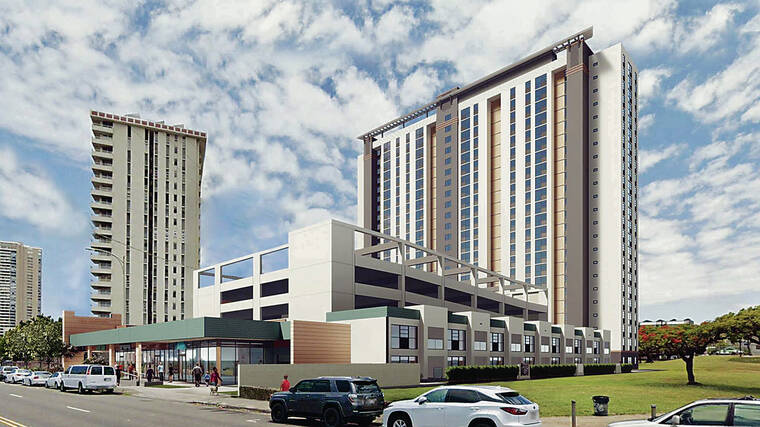
If you grew up on Oʻahu, you probably know the corner. King Street in Moʻiliʻili, where the Bowl-a-Drome used to sit — the old bowling alley a lot of us have a memory or two tied to. It's been gone for a while now. What's going up in its place is something this island has never seen from the Department of Hawaiian Home Lands.
DHHL just opened applications for its first-ever rental high-rise, a 23-story tower called Ke Ola Hou — plenty of folks are already calling it Hale Moʻiliʻili. And for an agency that has spent a century handing out single-family lots, this is a real turn.
A homestead that goes straight up
For most of its history, DHHL has meant one thing: a plot of land and a house on it, usually out in places like ʻEwa, Waimānalo, or up in Kapolei. Single-family, ground-level, a yard for the keiki. This is different. The Moʻiliʻili project is 278 units stacked in a tower, ranging from studios up to three-bedroom apartments, sitting right in the middle of urban Honolulu.
DHHL chairman Kali Watson put it plainly. The point, he said, is giving beneficiaries choices they don't currently have. Not everyone wants — or can wait for — a house and a yard on the far edge of the island. Some people want to live in town, close to work and school, and now that's on the table.
The whole thing carries a $155 million price tag, and applications opened this past week for people already on the DHHL waitlist.
Why the Moʻiliʻili address matters
Location is the quiet headline here. Moʻiliʻili is about as central as Oʻahu gets. You're minutes from the University of Hawaiʻi at Mānoa, a short hop from downtown and Waikīkī, and surrounded by the kind of mom-and-pop restaurants and shops that make the neighborhood what it is.
For a DHHL beneficiary, that's a genuinely new option. A traditional homestead lot often comes with a long commute — the H-1 grind from the West Side into town, day after day. A unit in Moʻiliʻili trades the yard for the address. No two-hour round trip. No math on what gas and time add up to over a year. That tradeoff won't fit everyone, but for plenty of families, town living is the whole point.
The wait behind the waitlist
Here's the part that gives this weight. To qualify for DHHL, you need at least 50 percent Hawaiian ancestry, and the waitlist for a homestead is one of the longest, slowest lines in the state. Tens of thousands of people are on it. Many have waited decades — some have passed their spot down to their kids without ever getting an award.
So a tower that can house 278 households, ready to move into by the end of this year, is not a small thing. It won't clear the list. But it's units that exist, on a real timeline, in a place people actually want to be.
For now the apartments are set up as affordable rentals. Watson has said rent-to-own options could come down the road, which would turn this from a place to live into a possible path to owning — the thing the waitlist has always been about.
A different shape for home
Step back and this fits a bigger pattern on Oʻahu. We're running out of easy land. You can only sprawl so far across ʻEwa and Central Oʻahu before the traffic, the infrastructure, and the plain lack of dirt catch up with you. Building up, not out, is more and more the only math that works on an island this size.
Watching Hawaiian Home Lands take that same step — trading the single-family template for a tower in town — says something about where housing here is headed. It's a shift a lot of us have felt coming for years.
Whether the model spreads depends on how this first one goes. But there's something fitting about it landing in Moʻiliʻili, on a corner people have passed their whole lives. The bowling alley is gone. What's rising in its place is a shot at home for families who've been waiting a very long time to get one.