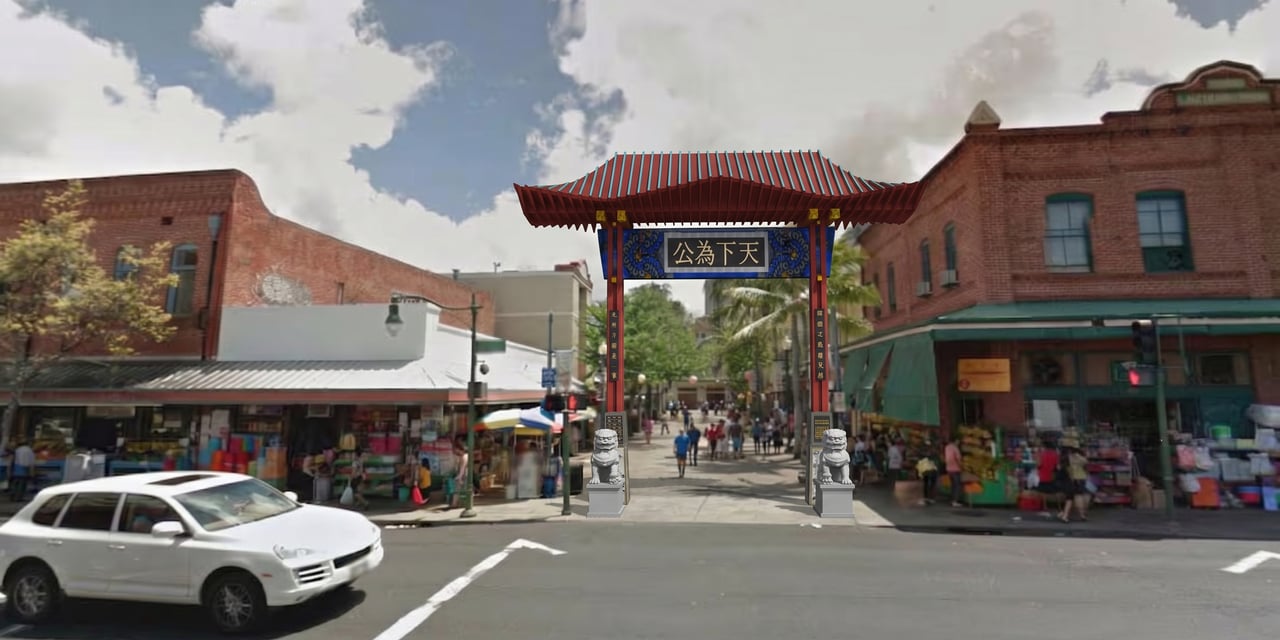
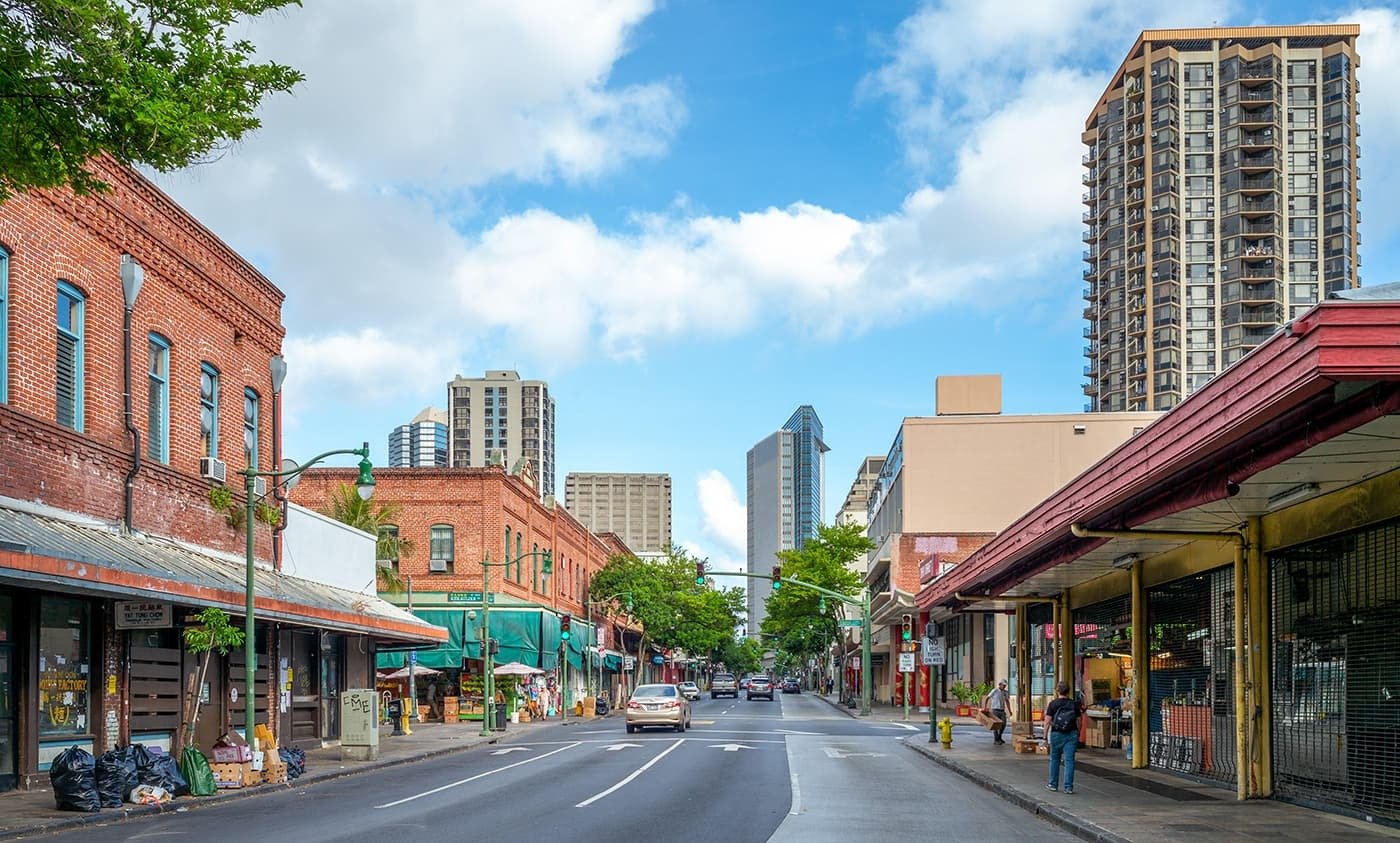
If you’ve taken a stroll down King Street past Kekaulike Mall recently, you might have noticed a bit more hustle and bustle than usual. There’s a fresh energy humming through the air, and it’s not just from the morning market crowds picking up fresh ginger, char siu, or the catch of the day. After years of dreaming, planning, and community fundraising, ground has officially broken on the historic neighborhood’s very first traditional gateway: the Honolulu Chinatown Archway.
It might surprise a lot of folks to learn that despite being one of the oldest established Chinatowns in the entire United States, our neighborhood has never actually had an official ceremonial arch. If you travel to San Francisco, Vancouver, or Yokohama, the grand, colorful archway is the first thing that welcomes you. For decades, O‘ahu residents and visitors alike have simply known where Chinatown begins by the shifting architecture, the open-air markets, and the unmistakable aroma of manapua and roasting duck.
Now, thanks to a dedicated push by community leaders through the non-profit A Better Chinatown Association—spearheaded by L&L Hawaiian Barbecue co-founder Eddie Flores, Jr.—that’s finally changing. The $1.2 million project is completely privately funded, proving just how much heart and commitment local families and business owners have for this place.
The first arch, standing at King and Kekaulike streets, isn't just about aesthetics; it’s a monument to the people who built the foundation of this community. The base of the arch’s two pillars will feature inscribed profiles of 14 iconic Chinese-Hawaiian pioneers—trailblazers like C.K. Ai, the philanthropist who founded City Mill, and Sau Ung Loo Chan, the first female attorney of Asian ancestry in Hawai‘i. For anyone who grew up around here or had grandparents who worked the old plantation fields and eventually saved enough to open up shop in town, seeing these names permanently honored is bound to bring a little lump to the throat.
But beyond the deep cultural pride, what does this mean for the neighborhood's day-to-day life, and how does it ripple out into the Honolulu Chinatown real estate market?
Chinatown has always been a beautiful contradiction. It’s an urban dense core with tight space constraints, older historic building footprints, and heavy foot traffic. Over the years, it has cycled through different identities—from a bustling plantation-era merchant hub to a rough-around-the-edges red-light district in the late 20th century, and more recently, a hip arts and nightlife district home to First Friday walks, trendy boutiques, and some of the best eateries on O‘ahu.
Yet, keeping a historic neighborhood safe, clean, and vibrant is a constant balancing act. This new archway represents phase one of a massive, coordinated effort to give the area a well-deserved facelift. Alongside the structure itself, the community is rolling out vibrant new murals—including one honoring Dr. Sun Yat-sen, who spent pivotal years right here in Honolulu—as well as traditional red lanterns and street banners. Phase two, slated for later this year, will introduce free daily walking and food tours to bring residents back into the heart of the district to support local mom-and-pop shops.
When you look at real estate trends on O‘ahu, location and infrastructure are everything. The timing of this revitalization isn’t a coincidence. It directly anticipates the arrival of the Skyline rail expansion, with the future Chinatown station (Hōlau) positioned just down the road at Nimitz Highway and Kekaulike Street.
When you pair a major mass-transit hub with a beautiful, walkable cultural destination, you create a powerful anchor for the local economy. For property owners and prospective buyers eye-ing live-work spaces, mixed-use commercial buildings, or residential units nearby in Downtown and Kakaʻako, these infrastructure upgrades signal long-term stability and growth. It shifts the perception of the neighborhood from a place people simply drive past on their way to the financial district, into a true destination where people want to linger, dine, and invest.
Living on an island means we don't have endless room to expand outward. Revitalizing our existing urban centers is how we preserve our history while creating spaces for the future. The Kekaulike Archway reminds us that real estate isn't just about square footage or interest rates; it’s about community identity. It’s about ensuring that the next generation of local families can walk down these historic streets, look up at a grand red archway, and feel an unmistakable sense of place.
Next time you’re in town, grab a cold bubble tea or a hot box of pork hash, take a walk down to Kekaulike Mall, and take a look at the progress for yourself. It’s a great time to witness a piece of modern O‘ahu history falling right into place.
-Daniel Ulu