If you've lived on Oʻahu long enough, you know the routine. Something comes up that the island can't handle — a part, a procedure, a specialist — and the answer is a plane ticket. Usually it's just an annoyance. Sometimes it's a whole lot more.
For families facing cancer, that plane ticket has carried real weight. Some of the newest treatments have only existed on the Mainland, which turned a hard diagnosis into an even harder choice: uproot your life for weeks or months, or go without. This week, that math shifted.
Care That Used to Require a Runway
On Monday, the University of Hawaiʻi Cancer Center in Kakaʻako opened the Hoʻōla Early Phase Clinical Research Center — the first center of its kind in state history. The name fits. Hoʻōla means to heal, to give life. And the whole point of the place is to let people do that here, at home.
Dr. Naoto Ueno, who directs the UH Cancer Center, called it a major milestone for cancer care in the islands. He'd know the stakes better than most — he's a researcher, a clinical trialist, and a two-time cancer survivor himself. For the first time, he said, qualifying patients can reach for promising experimental treatments without flying thousands of miles to get them.
What's Behind the Doors
The center is about 7,500 square feet, tucked onto the first and second floors of the existing Cancer Center. It came together with roughly $19.5 million in federal and state funding, plus donations — including more than $1 million from the Leona M. and Harry B. Helmsley Charitable Trust.
Inside, it's built for actual patient care, not just lab work:
- Six infusion bays
- Five patient rooms
- Two nurses' stations
- A pharmacy and two exam rooms
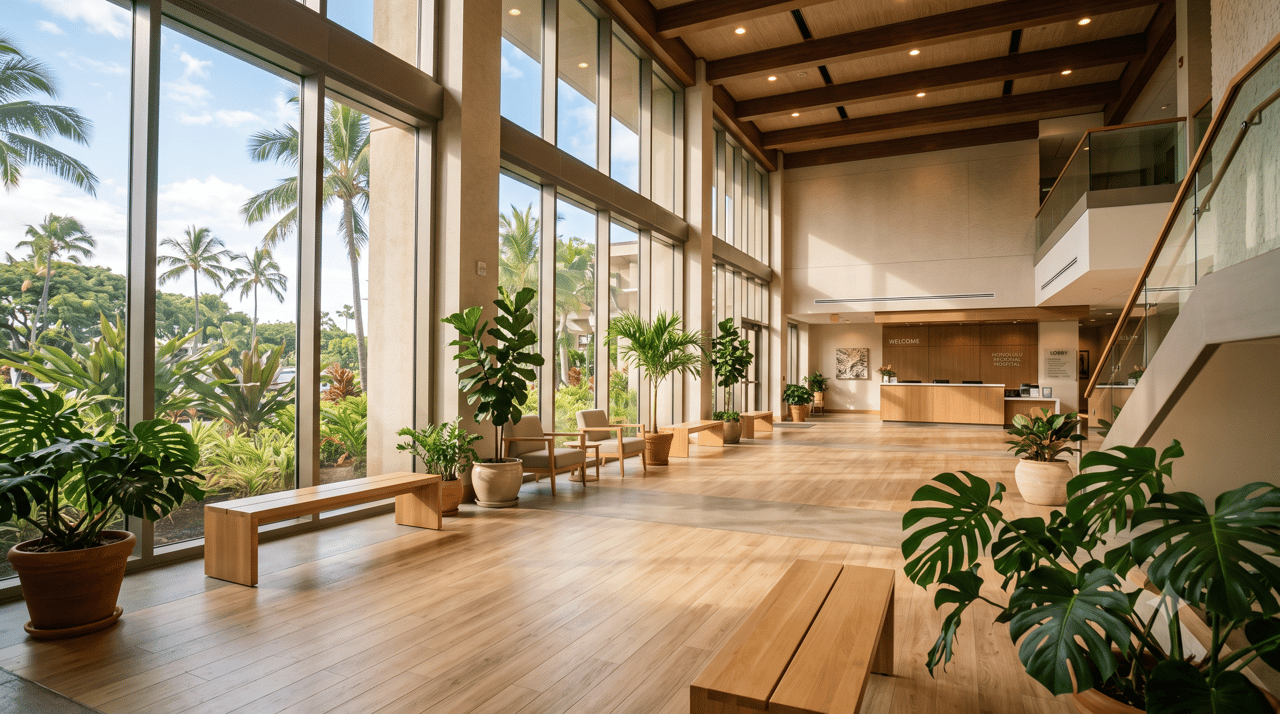
- A clinical research lab, plus a lobby and reception
In other words, a real clinical space where treatment happens — not a place you visit once and then get referred somewhere far away.
Why "Early Phase" Is the Part That Matters
Here's the piece worth slowing down on. Early-phase trials are the first tests of new therapies in people — the cutting edge, before a treatment becomes widely available. They're often the option families turn to when the standard playbook has run out.
Until now, those trials basically didn't happen here. If you wanted in, you flew out. That meant leaving your job, your home, and your support system behind at the exact moment you needed all three most. Being able to do this on Oʻahu — sleeping in your own bed, keeping your ʻohana close — isn't a small thing. It might be the whole thing.
The center is starting modestly and building. The goal is 30 active early-phase trials by 2031, which tells you this is a foundation, not a finish line.
A Team Effort, Island-Style
None of this runs in isolation. The UH Cancer Center works through the Hawaiʻi Cancer Consortium, which pulls in most of the names you already know from local health care — The Queen's Health Systems, Hawaiʻi Pacific Health, Kuakini Medical Center, Adventist Health Castle, Hilo Benioff Medical Center, HMSA, and the UH John A. Burns School of Medicine.
That matters because it means access isn't tied to one hospital or one part of town. It's a shared effort, which is about the most Hawaiʻi way to build something like this.
We talk a lot about the tradeoffs of island life — the cost, the space, the distance from the rest of the world. Distance from care has always been one of the quieter ones, the kind you don't think about until you or someone you love needs something the island didn't have. This week, that gap got a little smaller. And for the families who'll walk through those doors instead of boarding a plane, smaller is everything.