
Hawaiʻi’s New Tax Law Could Put It Among the Lowest-Income Tax States
CLICK HERE TO CALCULATE YOUR SAVINGS
If you live in Hawaiʻi, you know the reality: paradise comes with a hefty price tag. For years, we’ve topped the lists for cost of living and, painfully, the highest income taxes for working families. We complain about it at potlucks, we read about the "brain drain" in the paper, and we feel it every time we look at our paystubs.
But something massive just shifted.
While many of us were focused on the day-to-day grind, the state passed what is arguably the most significant tax reform in Hawaiʻi’s history. It isn't a one-time rebate or a temporary pause. It is a fundamental restructuring of how the state taxes its residents, phased in over the next seven years.
By the time this law is fully implemented in 2031, Hawaiʻi is projected to flip the script entirely, moving from one of the highest-tax states for average earners to one of the lowest.
Here is a breakdown of what is happening, and more importantly, what it looks like for your bank account.
The Two Levers: How They Are Cutting Taxes
The new law doesn't just lower a single percentage rate. It uses two powerful levers to reduce what you owe to the state.
1. Explosive Growth in the Standard Deduction
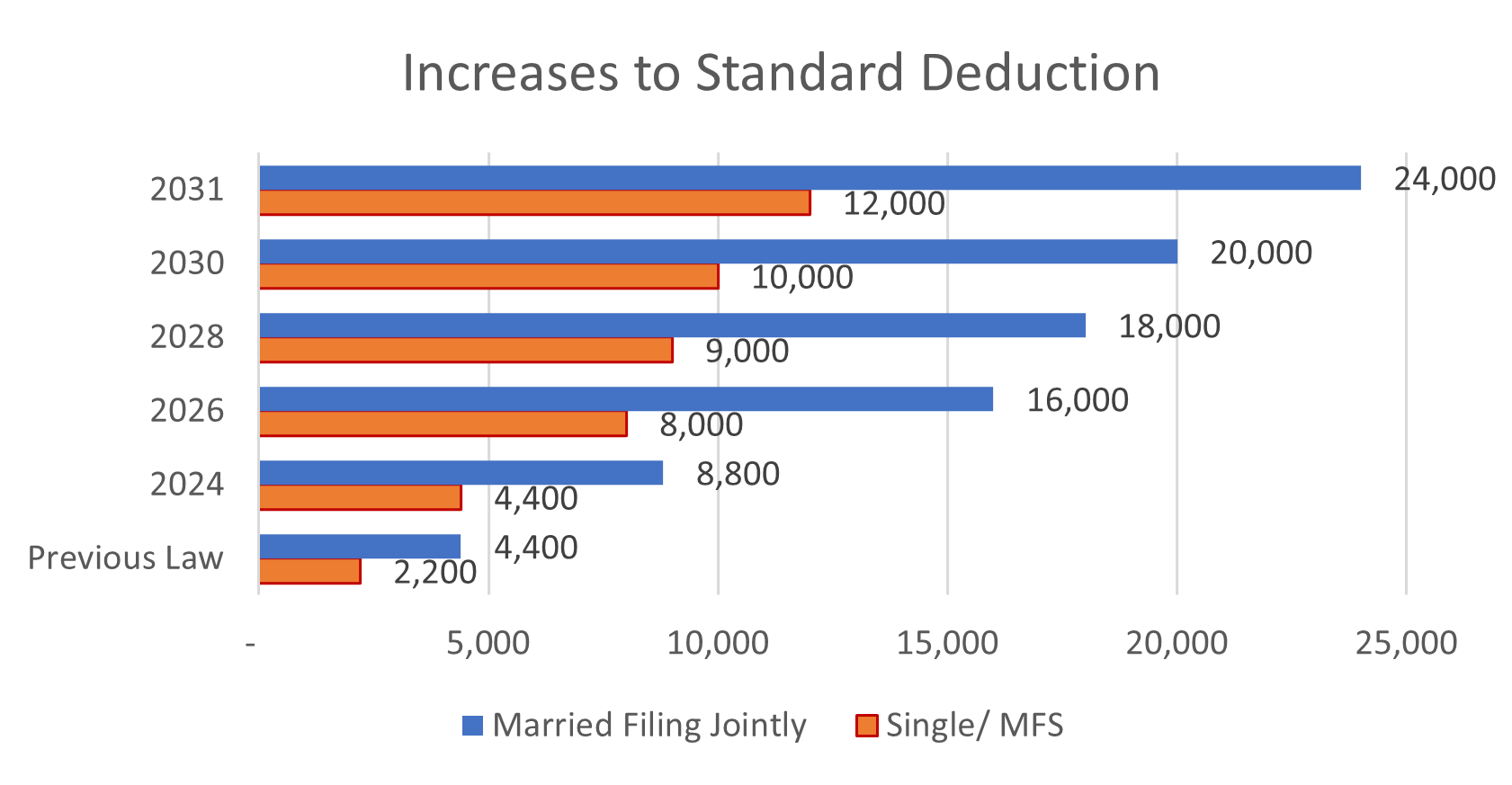
The standard deduction is the amount of income the state essentially "ignores" before they start calculating your tax. For years, Hawaiʻi’s standard deduction has been laughably low compared to the federal level. This meant the state started taking a cut of your paycheck almost immediately.
Starting in 2025, the state will begin raising that deduction significantly, aiming to match federal levels by 2031. This creates a much larger "tax-free" shield around your income.
2. Widening the Tax Brackets
Historically, Hawaiʻi has had very narrow tax brackets. This meant that even modest wage earners quickly found themselves bumped into higher percentage tax rates usually reserved for the wealthy in other states.
The new law drastically widens these brackets. You will have to earn significantly more money before you hit those higher tax rates. When you combine these two factors, the taxable income for working families shrinks dramatically.
CLICK HERE TO CALCULATE YOUR SAVINGS
Real World Scenario: The $3,600 Difference
It is easy to get lost in tax jargon, so let’s look at a real-world example to see what this actually feels like.
Consider a representative household—a working couple earning around $88,000 a year.
Under the old system, this family was hit hard, paying a substantial percentage of their income to the state. However, once the new law is fully phased in by 2031, their tax liability drops off a cliff.
Based on projections, this household will see their annual state tax bill drop by over $3,600.
Think about what that means for a monthly budget. That is an extra $300 every single month staying in that family's bank account instead of going to the Department of Taxation. That covers a significant portion of a grocery bill, a car payment, or goes directly into savings.
From Worst to First?
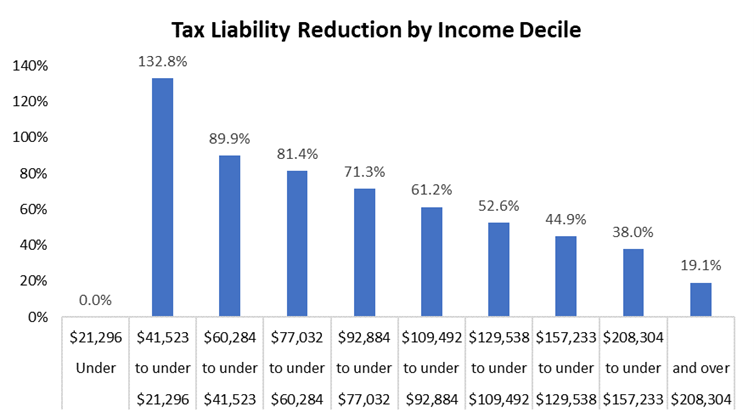
It sounds hyperbolic to say Hawaiʻi could become a "low tax state," but for working and middle-class families, the data supports it.
According to analyses by the state and local economic experts, this reform specifically targets the tax burden on lower- and middle-income residents. While high earners will still pay substantial taxes, the effective tax rate for the majority of Hawaii's workforce is about to plummet.
This isn't a magic bullet for our cost of living crisis—housing is still expensive, and shipping costs remain high. But this tax reform is the single biggest step the government has taken in decades to actually make it affordable for local families to stay in Hawaiʻi.
Keep an eye on your paystubs starting in 2025. You will start seeing the difference then, and the savings are only going to grow over the next few years.
-Daniel Ulu
Source: https://spn.org/hawaii-lowers-income-tax/